Appetizer vs Entree: Understanding the Difference in Global Cuisine
The Cultural Divide in Meal Terminology
When it comes to dining out, few things highlight cultural differences quite like menu terminology. What Americans call an "entree" would baffle most Europeans, and what constitutes an "appetizer" can vary dramatically depending on which restaurant you visit. This linguistic confusion stems from centuries of evolving dining traditions and cross-cultural influences.
In the United States and parts of Canada, the terminology is relatively straightforward: appetizers come first as small dishes designed to stimulate the appetite, while entrees follow as the substantial main course. However, step into a restaurant in Paris, London, or Rome, and you'll discover that "entrée" actually means something quite different – it's often synonymous with "appetizer" or "starter," referring to the dish that enters or begins the meal.
This distinction isn't merely semantic – it reflects fundamentally different approaches to meal structuring and dining philosophy. European formal dining traditionally unfolds through multiple carefully orchestrated courses, while American dining culture often emphasizes the centrality of a hearty main dish. Understanding these differences enhances not just our culinary knowledge but our appreciation for how food traditions evolve and diverge.
Think about the last time you dined at an upscale restaurant. Did you notice how the menu was organized? Was it divided into sections that made immediate sense to you, or did you have to pause and decipher what each category meant? These small moments of confusion reveal the living nature of food culture – always adapting, always crossing borders, and occasionally creating charming misunderstandings along the way.
What Is an Appetizer?
An appetizer, broadly defined, is a small dish served before the main meal with the specific purpose of stimulating the appetite. The word itself gives away its purpose – it's meant to "appetize" or awaken the palate. I've always found it fascinating how these small plates can set the tone for the entire dining experience. A well-chosen appetizer doesn't just make you hungry; it prepares your taste buds for what's to come.
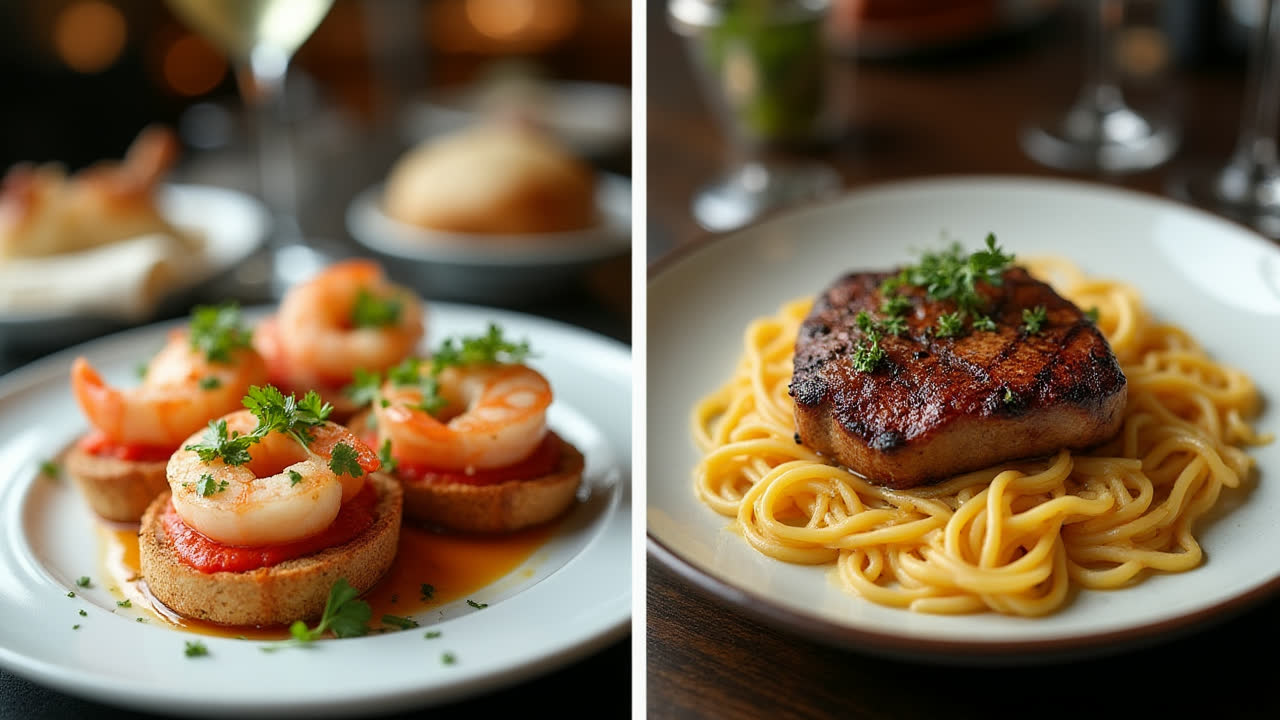
Common examples of appetizers include items like bruschetta, shrimp cocktail, stuffed mushrooms, chicken wings, spinach dip, samosas, spring rolls, and small salads. In fancy restaurants, you might encounter more elaborate options like foie gras, oysters, tartare, or amuse-bouche (literally "mouth amusers" – tiny, single-bite appetizers served as a chef's greeting). What all these diverse dishes share is their role as opening acts rather than the main performance.
Appetizers often feature bold flavors in small portions – they're designed to be interesting without being overwhelming or filling. They might be served family-style for sharing, encouraging socialization before the main course arrives. Many can be eaten with fingers or minimal cutlery, creating a more casual, interactive dining experience. Have you noticed how some of the most memorable restaurant moments happen during the appetizer course, when everyone is sharing and sampling different flavors?
In home cooking, appetizers often get relegated to special occasions or dinner parties, but incorporating this course into everyday meals can elevate the dining experience. Even something as simple as a small cup of soup or a few slices of cheese with crackers before dinner can transform an ordinary meal into something more structured and satisfying. The appetizer course isn't just about extra food – it's about pacing, anticipation, and the pleasure of gradually unfolding flavors.
What Is an Entree?
Here's where the cultural confusion really comes into play. In the United States and parts of Canada, the term "entree" refers unambiguously to the main course – the substantial centerpiece of the meal that follows the appetizer. American entrees typically feature a protein (meat, fish, or a vegetarian alternative) accompanied by sides like vegetables, potatoes, rice, or pasta. When Americans talk about "ordering an entree," they're referring to the largest, most filling portion of their meal.
However, if you travel to France – the country from which the term originates – you'll discover that "entrée" (meaning "entrance" or "entry") refers to the dish that begins or enters the meal. The linguistic origins make perfect sense when you understand traditional French formal dining, where the entrée was literally the first dish to enter the dining room in an elaborate procession of courses. Over time, this term evolved differently on opposite sides of the Atlantic, creating the confusion we experience today.
I once embarrassed myself at a high-end restaurant in Paris by expecting my "entrée" to be my main dish, only to receive what Americans would call an appetizer! The server explained, with admirable patience, that I should have ordered a "plat principal" (main plate) for what I was expecting. These small cultural misunderstandings are part of the joy of exploring food across different cultures.
The evolution of the entree in American dining is particularly interesting. In the early 20th century, as formal multi-course dining began to simplify, the term "entree" gradually shifted to describe increasingly substantial dishes. By the 1930s, entrees began to include heartier fish and chicken preparations, and eventually, the word came to describe the dominant dish served before dessert. Today's restaurant menus often have the largest section dedicated to entrees, reflecting their central importance in contemporary American dining.
Key Differences Between Appetizers and Entrees
Understanding the distinction between appetizers and entrees is essential for navigating menus and appreciating the structure of a well-planned meal. While regional variations exist, several fundamental differences typically distinguish these two crucial meal components:
| Comparison Point | Appetizers | Entrees (American Definition) |
|---|---|---|
| Serving Order | Served first, before the main meal | Served after appetizers as the main course |
| Portion Size | Smaller portions, often bite-sized | Larger, more substantial portions |
| Purpose | To stimulate appetite and prepare palate | To satisfy hunger as the meal's centerpiece |
| Typical Price | Usually lower-priced than entrees | Higher-priced, reflecting larger portions |
| Eating Method | Often finger foods or minimal utensils | Typically requires full cutlery |
| Sharing Culture | Commonly shared among diners | Usually individual portions |
| Nutritional Content | Often lighter, focus on flavor over substance | More balanced nutritionally, including protein |
| European Equivalent | Called starters, hors d'oeuvres, or entrées | Called main course or plat principal |
Beyond these structural differences, there's also an interesting distinction in how these courses are approached by chefs. Appetizers often allow for more creativity and experimentation, serving as a chef's playground for bold flavors and innovative presentations. Entrees, meanwhile, typically adhere more closely to established traditions and diner expectations – people tend to be more adventurous with small plates than with their main course.
Regional and Cultural Variations
The appetizer-entree relationship varies dramatically across different culinary traditions, reflecting deeper cultural attitudes toward dining. Understanding these variations enriches our appreciation of global food culture and helps avoid confusion when dining internationally.
In Mediterranean cultures like Spain, the concept of tapas represents a dining philosophy where small plates essentially become the entire meal. Rather than a progression from appetizer to entree, diners enjoy a continuous parade of small, shareable dishes. This approach emphasizes communal eating and conversation, with the focus on variety rather than a single main dish. I've spent evenings in Barcelona where what started as "just a few appetizers" turned into a three-hour tapas tour – a perfectly normal and celebrated way to dine!
Asian dining traditions often feature yet another approach. In Chinese banquets, for instance, dishes arrive in a specific sequence but are typically shared family-style, blurring the distinction between appetizers and entrees. Japanese kaiseki dining presents a highly structured progression of small, precisely crafted courses, each building upon the last in terms of flavor, texture, and seasonal expression. The concept of a dominant "main course" is less pronounced in these traditions.
Even within Western culinary traditions, fascinating regional variations exist. Italian dining typically includes antipasti (before the pasta), followed by primi (first courses, often pasta), secondi (second courses, usually protein-based), and then contorni (side dishes) – a structure that doesn't neatly map onto the American appetizer-entree dichotomy. British pub dining might feature "starters" followed by "mains," while French formal dining can include up to seven distinct courses in a carefully orchestrated procession.
These cultural differences aren't merely academic – they reflect fundamental attitudes about the purpose of dining. Some cultures prioritize efficiency, with clearly delineated courses moving promptly toward the main event. Others view dining primarily as a social occasion, where the pacing and sharing of multiple small dishes facilitates conversation and connection. Understanding these distinctions enriches our appreciation of how food serves as both cultural expression and social glue across different societies.
Modern Trends in Dining Structure
Contemporary dining culture continues to evolve, often blurring the traditional boundaries between appetizers and entrees. Several notable trends have emerged in recent years that challenge conventional meal structuring:
The rise of "small plates" restaurants represents perhaps the most significant shift. These establishments, inspired by Spanish tapas but incorporating global influences, often eliminate the appetizer-entree distinction entirely. Instead, they encourage diners to order multiple smaller dishes to share throughout the meal. This approach has gained tremendous popularity, especially among younger diners who value variety and social dining experiences over rigid course structures.
Food halls and market-style dining venues represent another evolution, where diners can assemble their own meal progression from multiple vendors. One person might grab dumplings as an appetizer from one stall before moving to another for their main course, while their dining companion might choose an entirely different combination. This flexible, customizable approach to dining suits contemporary preferences for personalization and diverse flavor experiences.
Chef's tasting menus offer yet another reinterpretation of traditional course structures. These carefully crafted experiences, usually featuring 5-12 small courses, deliberately play with the concept of progression. A tasting menu might begin with dishes that function like appetizers but then weave between lighter and more substantial preparations rather than building linearly toward a single main course. The focus shifts from the traditional appetizer-entree hierarchy to a holistic journey through the chef's culinary vision.
Even traditional restaurants have begun adapting to changing preferences. Many now offer appetizer portions of entrees or entree-sized appetizers, acknowledging that diners increasingly value flexibility in portion sizes and meal structuring. The once-clear boundary between these categories continues to blur, reflecting broader cultural shifts toward more personalized, less formal dining experiences.
Frequently Asked Questions About Appetizers and Entrees
Why is an entree called a main course in America but an appetizer in Europe?
This linguistic confusion stems from the evolution of formal dining traditions. The term "entrée" comes from French, meaning "entrance" or "entry." In traditional French multi-course dining of the 18th and 19th centuries, the entrée was literally the dish that entered or started the meal. In American dining culture, as formal multi-course meals simplified in the early 20th century, the term gradually shifted to describe increasingly substantial dishes served before dessert. By the 1930s, "entree" had come to designate the main course in American restaurants. European dining traditions maintained the original meaning, creating the transatlantic difference we see today.
Can appetizers be served as a meal on their own?
Absolutely! Creating a meal entirely from appetizers has become increasingly popular, sometimes called "grazing" or having "tapas-style" dining. Ordering multiple appetizers instead of an entree offers several advantages: greater variety of flavors, the ability to sample more of a restaurant's menu, and better portion control. Many restaurants now offer happy hour specials on appetizers, making this an economical dining option as well. When creating an appetizer-only meal, try to balance lighter options (like salads or vegetable dishes) with more substantial ones (like sliders or quesadillas) to create a satisfying combination.
What should I consider when planning appetizers and entrees for a dinner party?
When planning a dinner party menu, consider several key factors to ensure your appetizer and entree pairing works harmoniously. First, think about balance – if your entree is rich and heavy (like a creamy pasta or steak), opt for lighter appetizers (such as a fresh salad or vegetable-based dish). Conversely, if your main course is lighter (like grilled fish), you can serve slightly more substantial appetizers. Consider complementary rather than competing flavors – if your entree features bold Mediterranean flavors, appetizers with similar flavor profiles will create a cohesive experience. Timing is also crucial – choose appetizers that can be prepared ahead or require minimal last-minute attention so you can focus on finalizing the entree when guests arrive. Finally, consider quantity carefully – appetizers should stimulate appetite without filling guests before the main course arrives.
Conclusion
The distinction between appetizers and entrees reflects more than just menu organization – it reveals cultural attitudes toward dining, socialization, and food itself. In American dining culture, the clear progression from smaller appetizers to substantial entrees emphasizes efficiency and hierarchy, with the main course taking center stage. European traditions often embrace a more fluid approach, with multiple courses of varying sizes creating a comprehensive dining experience.
As global culinary influences continue to cross-pollinate, the rigid boundaries between these categories increasingly blur. Contemporary diners value flexibility, variety, and personalization over strict adherence to traditional meal structures. Restaurants have responded with innovative formats that challenge conventional definitions of appetizers and entrees while still honoring the fundamental purpose of these categories – to create a satisfying progression of flavors and textures.
Whether you're navigating a restaurant menu, planning a dinner party, or simply curious about culinary traditions, understanding the dynamic relationship between appetizers and entrees enhances appreciation for the thoughtful structuring behind a well-crafted meal. The next time you dine out, perhaps you'll notice how these distinctions shape your experience – or how creatively they're being reinvented by innovative chefs.
Most importantly, this culinary distinction reminds us that dining is never just about sustenance – it's a cultural practice rich with history, meaning, and continuous evolution. The appetizer-entree relationship, with all its regional variations and contemporary reinterpretations, offers a fascinating lens through which to explore how we imbue the necessity of eating with social significance and artistic expression.