Documentary vs Feature Film: 8 Essential Differences You Should Know
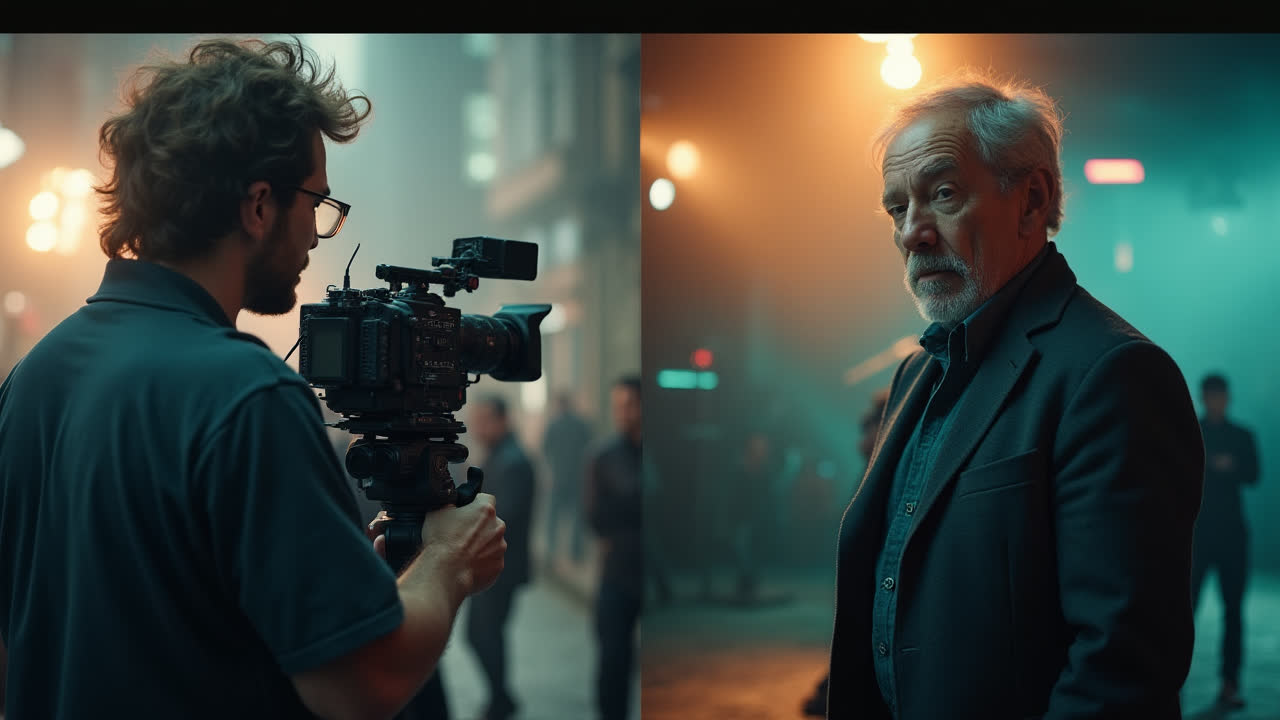
Have you ever wondered what truly separates a documentary from a feature film? Though both appear on our screens and tell compelling stories, they're fundamentally different in their approach, purpose, and creation. The distinction goes far beyond simply labeling one as "real" and the other as "made up."
I've spent years watching both types of films, and I've come to appreciate how each serves a unique purpose in the world of cinema. Understanding these differences not only enhances our viewing experience but also helps us appreciate the distinct artistry behind each format. Whether you're a film student, an avid moviegoer, or simply curious about the films you watch, knowing what sets these formats apart is genuinely fascinating.
In this guide, we'll explore the fundamental differences between documentaries and feature films, from their core purposes to their production methods. By the end, you'll have a deeper understanding of why "The Dark Knight" and "March of the Penguins" feel so different despite both being excellent films in their own right.
What Exactly Is a Documentary Film?
A documentary is a non-fictional film that attempts to document reality. When I watched my first serious documentary (Ken Burns' "The Civil War"), I was struck by how different the experience felt from watching Hollywood blockbusters. There's something powerful about knowing you're witnessing real events, real people, and real consequences.
Documentaries serve as a window into actual events, situations, and lives. They aim to educate, inform, and sometimes inspire viewers to take action. Think about powerful documentaries like "An Inconvenient Truth" or "Blackfish" – both created massive public discussions and even policy changes. That's the unique power of documentary filmmaking.
What makes documentaries special is their commitment to truth. While they often have a viewpoint or perspective, they're grounded in factual representation. The filmmaker's job isn't to create a story from scratch but to find the compelling narrative that already exists in reality. I remember watching "Free Solo" and being on the edge of my seat, not because of clever scripting, but because I knew Alex Honnold was really climbing El Capitan without ropes.
Documentary production typically involves:
- Real-world filming in actual locations
- Interviews with genuine subjects, not actors
- Archival footage that captures historical moments
- Minimal or no staging of events (though some reconstruction may occur)
- Narration that guides the viewer through factual information
The budget for documentaries is usually considerably smaller than feature films. A documentary might be made for a few thousand dollars, whereas even a modest feature film typically requires millions. This budget constraint often leads to creative solutions and a distinct visual style that documentary lovers come to appreciate.
Understanding Feature Films
On the flip side, a feature film exists primarily to entertain. Whether it's making us laugh, cry, or sit in suspense, entertainment value is at its core. When I watch something like "The Avengers" or "The Godfather," I'm looking for an emotional journey, not necessarily factual information.
Feature films tell fictional stories with invented characters and situations. Even when based on true events (like "The Social Network" or "Bohemian Rhapsody"), the creators take significant artistic license to craft a more engaging narrative. I once listened to a screenwriter explain that their job is not to tell exactly what happened, but to tell what could have happened in the most compelling way possible.
The production of feature films is an entirely different beast from documentaries. Everything you see on screen has been carefully planned, from the dialogue to the lighting to the camera movements. Nothing is spontaneous - even scenes that appear improvised are usually the result of multiple takes and careful direction.
Feature films require enormous resources, including:
- Professional actors who rehearse and perform scripted scenes
- Purpose-built sets or carefully selected and modified locations
- Elaborate costume and makeup departments
- Special effects teams (both practical and digital)
- Extensive post-production with sound design, color grading, and more
The budget difference is staggering. While a documentary might be completed for $100,000, a modest Hollywood feature might cost $20 million, with blockbusters easily exceeding $200 million. This financial reality shapes everything about how feature films look and feel compared to documentaries.
I've always found it fascinating how we willingly suspend our disbelief when watching feature films. We know the people on screen are actors pretending to be someone else, yet we become emotionally invested in their fictional journeys. That's the magic of feature filmmaking – creating worlds and stories so compelling that we momentarily forget they're not real.
Documentary vs Feature Film: Detailed Comparison
| Comparison Point | Documentary Films | Feature Films |
|---|---|---|
| Primary Purpose | To inform, educate, and document reality | To entertain and provide escapism |
| Subject Matter | Real events, people, and situations | Fictional stories, characters, and scenarios |
| Script Approach | Often unscripted or loosely scripted | Carefully scripted with planned dialogue |
| Who Appears | Real people as themselves | Actors portraying fictional characters |
| Filming Locations | Real locations where events occur | Sets, studios, or modified locations |
| Budget Scale | Typically lower ($50K-$2M) | Substantially higher ($1M-$300M+) |
| Production Control | Limited control over events | Complete control over all elements |
| Audience Expectation | Truth and authenticity | Engaging story and emotional impact |
The Creative Process: How They're Made
The creation process for documentaries and feature films couldn't be more different. Having spoken with filmmakers from both worlds, I've learned that they require entirely different skill sets and mindsets.
Documentary filmmakers often begin with research and investigation. They might spend months or even years digging into their subject before filming a single frame. I once met a documentary director who had collected over 200 hours of interviews for what would eventually become a 90-minute film. The process is about discovery – finding the story that already exists and determining the best way to tell it.
In contrast, feature filmmaking starts with a script that lays out exactly what will happen on screen. Every line of dialogue, every action, and every scene transition is planned before production begins. The director's job is to execute this vision as effectively as possible, working with actors to bring the characters to life and with the crew to create the right look and feel for each scene.
Documentary editing is particularly fascinating because the story often emerges in the editing room. Filmmakers sift through countless hours of footage to find the narrative thread. It's like sculpting – starting with a massive block of material and carefully chipping away until the true form reveals itself.
Feature film editing, while still challenging, follows a more predetermined path. The editor works from the script and shot list, assembling the pieces according to the plan (though certainly making creative choices along the way). The difference reminds me of the distinction between finding a path through an unexplored forest versus following a detailed map – both require skill, but they're fundamentally different challenges.
"In fiction, the director is God; in documentary, God is the director." – Alfred Hitchcock
This quote perfectly captures the distinction. Feature film directors control every aspect of their creation, while documentary directors must adapt to the unpredictable nature of real life. Both approaches produce incredible cinema, but through very different means.
Impact and Purpose: Why They Matter
The different approaches of documentaries and feature films serve distinct purposes in our culture. Documentaries hold a special place as historical records and agents of social change. When I think about pivotal moments in public awareness – whether about environmental issues, social injustice, or political corruption – documentaries have often been at the forefront.
Take "Bowling for Columbine" or "Super Size Me" – these films didn't just entertain; they sparked national conversations and contributed to actual policy and corporate changes. That direct real-world impact is something unique to documentary filmmaking. I still remember watching "Food, Inc." and immediately changing my grocery shopping habits – that's the power of seeing reality presented in a compelling way.
Feature films serve a different but equally important cultural purpose. They allow us to explore human experiences, emotions, and ethical dilemmas through the safe distance of fiction. A film like "Schindler's List" or "12 Years a Slave" can help us process historical trauma in ways that might be too painful in documentary form. And lighthearted features like "Toy Story" or "The Princess Bride" provide shared cultural touchstones and much-needed escapism.
I've always found it interesting how the two forms can work together to shape our understanding of important topics. For instance, after watching the feature film "The Big Short," many viewers sought out documentaries like "Inside Job" to better understand the actual 2008 financial crisis. The fictional treatment grabbed attention and emotional investment, while the documentary provided deeper factual context.
Both forms ultimately help us make sense of our world – documentaries by showing us things as they are, and feature films by showing us things as they might be. We need both perspectives to fully comprehend the complexity of human experience.
Blurring the Lines: Hybrid Approaches
While we've been discussing the clear distinctions between documentaries and feature films, it's worth noting that the line between them has become increasingly blurred in recent years. Some of the most innovative filmmaking happens in this gray area.
Docudramas recreate actual events with actors but maintain a commitment to factual accuracy. Films like "United 93" or series like "Chernobyl" aim to represent real events with dramatic techniques. I find these particularly powerful when they recreate moments that weren't captured on camera but deserve to be remembered.
On the flip side, mockumentaries use documentary techniques to tell fictional stories. "This Is Spinal Tap" and "What We Do in the Shadows" adopt documentary conventions – talking head interviews, handheld camera work, direct address to the camera – to enhance their comedy. The first time I saw "The Blair Witch Project," I was genuinely unsure whether I was watching fiction or reality – a testament to how effectively it borrowed documentary techniques.
Some filmmakers deliberately play with this boundary to make audiences question what's real. The rise of reality TV has further complicated matters, creating highly produced and manipulated content that masquerades as documentary but often more closely resembles feature film in its construction and storytelling.
These hybrid approaches show that while the distinction between documentary and feature film is important, creative filmmaking often transcends simple categorization. What matters most is whether the film achieves its intended purpose and connects with its audience.
Frequently Asked Questions
Can documentaries use actors or scripted scenes?
Yes, documentaries can use actors and scripted scenes, but they do so differently than feature films. When documentaries use actors, it's typically for historical reenactments or to visualize events that weren't captured on camera. These segments are usually clearly identified as reconstructions. The key difference is that documentary reconstructions aim to accurately represent real events that actually happened, while feature films create fictional scenarios. Some documentary purists argue against using any reenactments, believing they compromise authenticity, while others see them as valuable tools for storytelling when used responsibly and transparently.
Why are feature films more popular than documentaries?
Feature films generally attract larger audiences for several reasons. First, the entertainment industry invests substantially more in marketing feature films, making them more visible to potential viewers. Second, feature films offer escapism and emotional experiences designed specifically to engage viewers, while documentaries prioritize information and education over pure entertainment. Third, feature films typically have higher production values, recognizable stars, and more polished visuals that appeal to mainstream audiences. However, streaming platforms have significantly increased documentary viewership in recent years by making them more accessible and highlighting quality non-fiction content, narrowing the popularity gap between the two formats.
Can a film be both a documentary and a feature film?
Strictly speaking, a film cannot simultaneously be both a pure documentary and a feature film, as they have fundamentally different approaches to truth and storytelling. However, many films exist in a gray area between these categories. "Hybrid documentaries" or "creative documentaries" incorporate elements from both worlds. Films like "The Act of Killing" or "Waltz with Bashir" use creative, sometimes fictional techniques to explore factual subjects. These hybrid approaches can be powerful tools for exploring complex truths that might be inaccessible through traditional documentary methods alone. The film industry has created categories like "docudrama," "documentary fiction," and "non-fiction feature" to describe these boundary-crossing works.
Conclusion: Different Tools for Different Stories
As we've explored throughout this article, documentaries and feature films represent two distinct approaches to cinematic storytelling. Each has its strengths and limitations, and each serves a unique purpose in our cultural landscape.
Documentaries connect us with reality, helping us understand our world and often inspiring us to change it. Feature films transport us to imaginary worlds, allowing us to experience emotions and perspectives beyond our daily lives. Both are powerful vehicles for human expression and connection.
The next time you're deciding what to watch, consider what experience you're seeking. Do you want to learn something new about the world as it is? A documentary might be the perfect choice. Looking to escape into a different reality for a couple of hours? A feature film might be just what you need.
Better yet, why not appreciate both forms? Some of the most rewarding viewing experiences come from exploring how different filmmaking approaches tackle similar themes. A weekend double feature of a documentary and a fiction film on related subjects can provide fascinating perspectives on topics that matter to you.
What's your preference – documentaries, feature films, or a mix of both? Whatever you choose, understanding the distinctive characteristics of each format can only enhance your appreciation of the filmmaker's craft and the stories they tell.