Facilitated Diffusion vs Active Transport: Key Differences Explained
Facilitated Diffusion vs Active Transport: Key Differences Explained
Understanding how molecules move across cell membranes is fundamental to grasping cellular biology. Facilitated diffusion and active transport are two essential mechanisms that cells use to regulate what enters and exits their boundaries. I've always found it fascinating how these processes work like specialized security guards at the cell's entrance, deciding who gets in and who stays out.
These membrane transport methods differ dramatically in their energy requirements and how they handle the movement of substances. While one follows the natural flow of concentration gradients, the other fights against the current, requiring cellular energy to do so. This distinction makes all the difference in how cells maintain their internal environment.
What is Facilitated Diffusion?
Let me break this down in simpler terms: facilitated diffusion is like having a helpful friend who lets you cut through the crowd at a busy concert venue. It's a passive process that helps molecules cross the cell membrane without the cell having to expend any energy. The molecules move from an area of higher concentration to an area of lower concentration—essentially going with the flow.
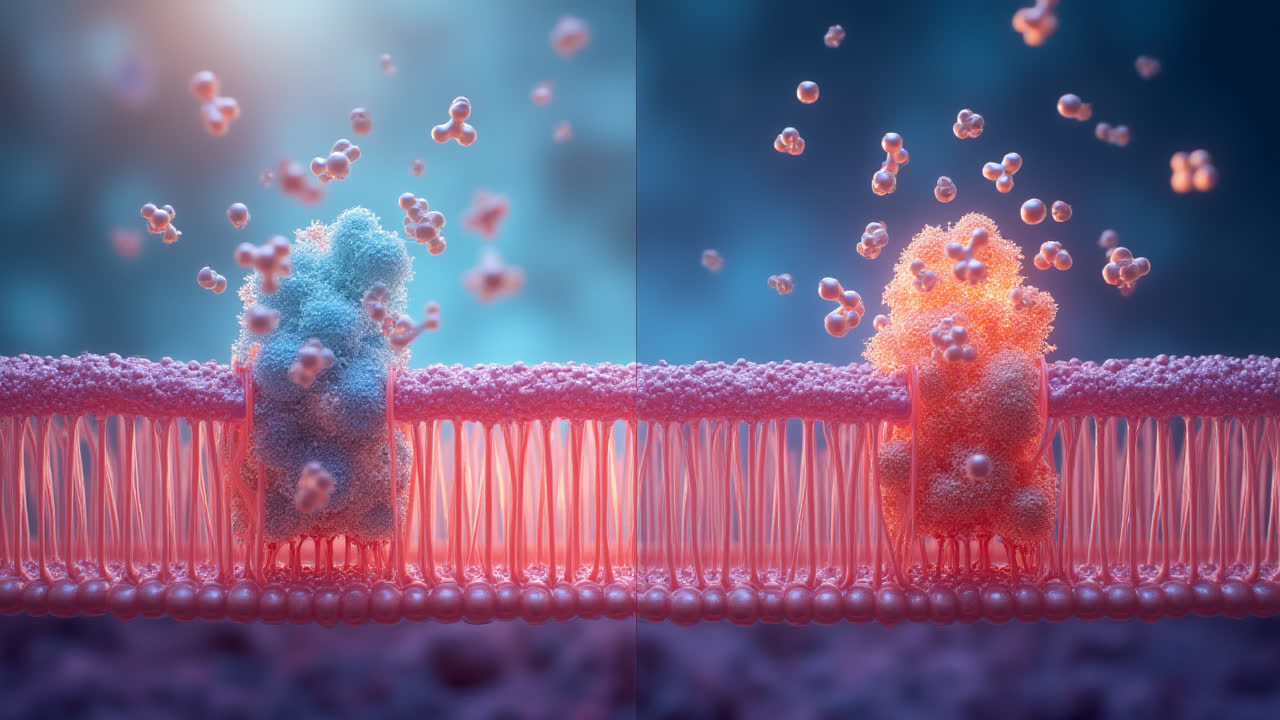
This process relies on special proteins called transmembrane proteins, which act as bridges across the otherwise impenetrable membrane. These proteins come in two main types: carrier proteins and channel proteins. Think of them as different types of doors in a building—some are revolving doors that change shape to let you through, while others are simple passageways.
Carrier proteins are the more sophisticated of the two. They actually bind to the molecules they're transporting and undergo a shape change, like a lock and key mechanism. Channel proteins, on the other hand, form pores that molecules can simply pass through. It's fascinating how nature has evolved these different strategies for the same basic purpose.
Understanding Active Transport
Active transport is the bodybuilder of cellular transport mechanisms. Unlike facilitated diffusion, it requires energy in the form of ATP to move molecules against their concentration gradient. If facilitated diffusion is like floating downstream, active transport is like paddling upstream—it requires effort and fuel.
There are two main types of active transport: primary and secondary. Primary active transport directly uses ATP, the cell's energy currency, to power the movement of molecules. The sodium-potassium pump is the classic example here, working tirelessly to maintain the cell's electrical potential. It's like having your own personal fitness trainer constantly working to keep you in shape.
Secondary active transport is more subtle—it's like hitchhiking. It uses the energy from one molecule moving down its gradient to transport another molecule against its gradient. The sodium-glucose cotransporter in our intestines is a perfect example, helping us absorb glucose from our food. Nature really knows how to optimize its systems!
Key Differences Between the Two Mechanisms
| Feature | Facilitated Diffusion | Active Transport |
|---|---|---|
| Energy Requirement | No energy required | Requires ATP or electrochemical gradient |
| Direction | Down concentration gradient | Against concentration gradient |
| Proteins Used | Channel or carrier proteins | Carrier proteins with ATPase |
| Examples | Glucose transporters, ion channels | Sodium-potassium pump, calcium pump |
| Selectivity | Highly selective | Highly selective |
| Transport Rate | Faster, limited by protein saturation | Slower, limited by ATP availability |
| Regulation | Limited, concentration-dependent | Tightly regulated by the cell |
| Primary Purpose | Maintain equilibrium | Maintain cell potential and homeostasis |
Practical Applications and Examples
You might be wondering where we see these mechanisms in everyday life. Well, they're happening inside you right now! Facilitated diffusion helps glucose enter your cells after a meal, while active transport keeps your nerve cells ready to fire by maintaining the sodium-potassium balance.
In the pharmaceutical industry, understanding these mechanisms is crucial for drug delivery. Some medications are designed to use facilitated diffusion to enter cells, while others might inhibit active transport pumps to treat certain conditions. It's like knowing which door to use at a building to get to your destination efficiently.
I find it particularly interesting how these processes work together in our kidneys. The kidney nephrons use both mechanisms to filter blood and reabsorb essential nutrients. It's like having both an express lane and a regular lane on a highway—each serves its purpose depending on the situation.
Factors Affecting Transport Efficiency
The efficiency of these transport mechanisms depends on several factors that can vary under different conditions. Temperature, for instance, affects the speed of molecular movement and protein function. I've always thought of proteins as being a bit like us—they work slower when it's too cold and might get overwhelmed when it's too hot.
The concentration gradient plays a huge role in facilitated diffusion. The steeper the gradient, the faster the transport, at least until the proteins become saturated. It's similar to how a water slide works faster with more water flow, but only up to a point where it levels off.
For active transport, the availability of ATP is crucial. When cells are energy-depleted, active transport slows down or stops entirely. This is why proper nutrition and cellular health are so important—without energy, cells can't maintain their internal environment effectively.
Clinical Significance
Understanding these transport mechanisms has profound implications in medicine. Many genetic disorders result from defective transport proteins. Cystic fibrosis, for example, involves a malfunctioning chloride channel, while diabetes can be related to glucose transporter problems.
Drug interactions often occur because many medications affect these transport systems. Some antibiotics work by inhibiting active transport in bacteria, while certain heart medications target the sodium-potassium pump. It's like having different keys that can unlock or jam different doors in the cellular machinery.
Cancer research has also revealed how tumor cells often upregulate certain transporters to meet their increased metabolic demands. This knowledge opens up new possibilities for targeted therapies that could disrupt these overactive transport systems specifically in cancer cells.
Frequently Asked Questions
Do both facilitated diffusion and active transport require proteins?
Yes, both mechanisms use transmembrane proteins, but they use them differently. Facilitated diffusion uses channel and carrier proteins that simply provide a pathway across the membrane, while active transport uses carrier proteins coupled with ATPase enzymes that actively pump molecules against their gradient.
Can a molecule use both mechanisms to cross the cell membrane?
Absolutely! Many molecules can use either mechanism depending on the concentration gradient and the cell's needs. For example, glucose can enter cells through facilitated diffusion when blood sugar is high, but the same cells might use secondary active transport to absorb glucose when concentrations are low.
Why do cells bother with active transport if facilitated diffusion is easier?
Active transport is essential for maintaining concentration gradients that are crucial for cell function. For instance, the sodium-potassium pump maintains the electrical potential needed for nerve transmission and muscle contraction. Without active transport, cells couldn't create the specialized internal environments necessary for life.
Conclusion
The fundamental difference between facilitated diffusion and active transport lies in their approach to moving molecules across cell membranes. While facilitated diffusion takes the path of least resistance, moving molecules down their concentration gradient without energy expenditure, active transport does the heavy lifting, moving molecules against their gradient using cellular energy.
Both mechanisms are indispensable for cellular function, working in harmony to maintain the delicate balance of molecules inside and outside the cell. Understanding these processes isn't just academic—it has real-world applications in medicine, drug development, and our understanding of how life functions at the cellular level.
So the next time you think about how your body works, remember these microscopic transport systems working tirelessly to keep you alive and healthy. They're like the unsung heroes of cellular biology, each playing their unique role in the dance of life.