Heart vs Mind: Understanding the Key Differences Between Emotions and Intellect
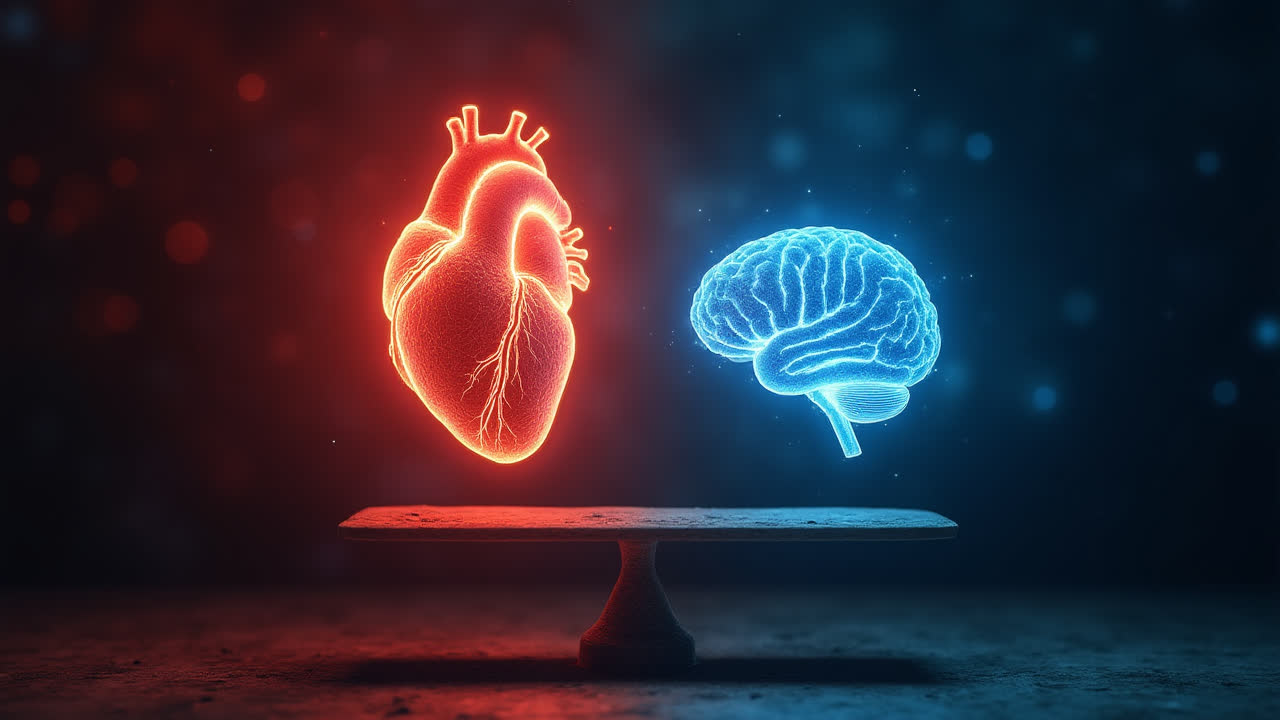
Have you ever found yourself torn between what your heart tells you and what your mind suggests? This internal conflict is something we all experience throughout our lives, especially when making important decisions. The battle between following your emotions versus your logical reasoning is a universal human experience that has fascinated philosophers, psychologists, and ordinary people for centuries.
The difference between heart and mind goes beyond just biological definitions—it touches on how we perceive ourselves, make decisions, and interact with the world around us. While science clearly defines these as distinct physical organs with specific functions, our cultural understanding often assigns them metaphorical roles that influence how we think about our thoughts and feelings. In this article, we'll explore this fascinating duality that shapes our human experience.
Sometimes, I find myself completely overwhelmed by emotions that seem to originate from my heart, while at other times, I'm guided by pure rational thought that I associate with my mind. This personal tug-of-war between feelings and logic is something we all navigate daily—whether we're choosing a career path, deciding on a relationship, or simply figuring out what to have for dinner. Understanding this dynamic can help us make better decisions and live more balanced lives.
Understanding the Heart: More Than Just a Biological Pump
From a biological perspective, the heart is primarily an organ located between our lungs that circulates and purifies blood through its four specialized chambers. It beats approximately 100,000 times per day, pumping about 2,000 gallons of blood through your body. But in figurative terms, the heart has taken on a much deeper symbolic meaning across cultures and throughout human history.
When we talk about "listening to our hearts," we're referring to paying attention to our emotional intuition and feelings. The heart is commonly associated with emotions like love, compassion, kindness, and empathy. Think about how we use heart-related expressions in everyday language: "I'm heartbroken," "My heart goes out to you," or "I love you with all my heart." These phrases reveal how deeply we associate this organ with our emotional experiences.
Interestingly, there might be some scientific backing to this association. Recent studies in the field of neurocardiology suggest that the heart contains its own intrinsic nervous system, sometimes called a "heart brain," consisting of approximately 40,000 neurons. This complex network allows the heart to sense, process information, make decisions, and even learn and remember—independently from the brain. Additionally, the heart produces hormones that affect various brain functions, including memory, attention, perception, and problem-solving abilities.
My grandmother used to tell me, "When you can't decide what to do, place your hand over your heart and listen." While I initially dismissed this as sentimental advice, I've come to appreciate the wisdom in tuning into our emotional intelligence. Sometimes, our emotional reactions provide valuable information that our rational thinking might miss. For instance, that inexplicable feeling of unease around certain people or situations can be your intuitive system detecting subtle cues that your conscious mind hasn't processed yet.
Exploring the Mind: The Center of Cognition and Rational Thinking
The mind represents our cognitive faculties, encompassing consciousness, perception, thinking, judgment, memory, and language processing. While many people use "mind" and "brain" interchangeably in everyday conversation, some philosophical traditions distinguish between them. The brain is the physical organ, while the mind might be understood as the non-physical entity responsible for our awareness, thoughts, and consciousness.
Our minds excel at logical reasoning, analysis, and problem-solving. When we make decisions based on facts, evidence, and careful consideration of consequences, we're engaging primarily with our minds. The mind helps us evaluate options objectively, plan for the future, and understand complex concepts. It's the part of us that can step back from emotional responses to assess situations more dispassionately.
Modern neuroscience locates most cognitive functions in the brain, particularly in the cerebral cortex. The brain's approximately 86 billion neurons form an incredibly complex network that enables everything from basic survival functions to advanced abstract reasoning. The prefrontal cortex, in particular, plays a crucial role in what we think of as "rational thinking"—planning, decision-making, moderating social behavior, and personality expression.
I remember struggling with a difficult career decision a few years ago. My heart pulled me toward a creative but risky path, while my mind logically pointed out the security and benefits of staying in my corporate job. I found myself making lists, analyzing financial projections, and considering five-year plans—all activities of the mind trying to bring order and clarity to an emotionally charged decision. This analytical process provided valuable perspective, even though it couldn't completely resolve the tension between what I wanted emotionally and what seemed rational.
Key Differences Between Heart and Mind
| Aspect | Heart | Mind |
|---|---|---|
| Biological Function | Circulation and purification of blood | Processing information, controlling bodily functions |
| Figurative Association | Emotional processing and sentiments | Rational thinking and cognitive abilities |
| Related Emotions/States | Love, compassion, empathy, intuition | Logic, reason, analysis, critical thinking |
| Decision-Making Style | Intuitive, emotional, instinctive | Calculated, analytical, evidence-based |
| Response Time | Often immediate and reactive | Usually deliberate and considered |
| Physical Location | Between the lungs in the chest | Associated with the brain in the skull |
| Perception Accuracy | Can be influenced by emotions and bias | Strives for objectivity but can still have biases |
| Cultural Symbolism | Commonly represents love, soul, character | Often represents intelligence, wisdom, reason |
The Interplay Between Heart and Mind
Rather than being completely separate systems, the heart and mind constantly interact, influencing each other in fascinating ways. Emotions affect our thinking processes just as rational thought can shape our emotional responses. This dynamic relationship creates the rich tapestry of our inner experience and decision-making processes.
When we experience intense emotions, our brain chemistry changes, affecting how we think and process information. Strong feelings like fear or anger can activate the amygdala, triggering our fight-or-flight response and temporarily reducing activity in the prefrontal cortex—the area responsible for rational thinking. This explains why it's harder to think clearly when we're emotionally overwhelmed. Conversely, conscious rational thinking can help us regulate our emotions through techniques like cognitive reframing and mindfulness.
The ideal decision-making process often involves integrating both heart and mind. Emotional intelligence allows us to recognize and understand our feelings without being controlled by them, while cognitive skills help us analyze situations objectively. Together, they provide a more complete picture than either could offer alone. Research suggests that people with damage to emotional processing areas of the brain often struggle with decision-making, even though their logical abilities remain intact—highlighting how crucial emotions are to effective reasoning.
I've noticed this interplay in my own life when making important decisions. For the best outcomes, I need both the enthusiasm and intuition that comes from my "heart" and the careful planning and analysis that comes from my "mind." Neither alone is sufficient. When I've ignored strong emotional signals in favor of pure logic, I've sometimes made decisions that looked good on paper but left me feeling unfulfilled. Similarly, choices made in emotional moments without rational consideration have occasionally led to impulsive actions I later regretted.
Cultural and Philosophical Perspectives
Throughout history, different cultures and philosophical traditions have addressed the relationship between heart and mind in fascinating ways. In ancient Egypt, the heart was considered the center of a person's being and intelligence, while the brain was thought relatively unimportant. Conversely, Aristotle believed the brain's primary purpose was to cool the blood heated by the heart, which he considered the seat of intelligence.
Eastern philosophical traditions often take a different approach to the heart-mind dichotomy. In many Buddhist and Taoist perspectives, the goal is to harmonize these aspects rather than seeing them as opposing forces. The concept of "heart-mind" (xin in Chinese) doesn't separate emotional and rational faculties as distinctly as Western traditions often do. Similarly, in Hindu philosophy, higher consciousness transcends both emotional reactions and rational limitations.
Modern Western psychology has evolved from viewing emotions as irrational disruptions to recognizing their crucial role in effective decision-making and social functioning. Researchers like Antonio Damasio have demonstrated that patients with damage to emotional processing centers struggle with decisions despite intact rational capabilities. Daniel Kahneman's work on fast (intuitive) and slow (deliberative) thinking has further illuminated how these complementary systems work together in our everyday cognition.
I find it comforting that across cultural and historical divides, humans have consistently wrestled with understanding these dual aspects of our experience. The universal nature of this exploration suggests something fundamental about how we process our existence—navigating between the immediate, felt reality of our emotions and the reflective, analytical capabilities of our rational minds. Perhaps the wisdom lies not in choosing one over the other but in learning when to trust each and how to integrate their insights.
Practical Applications: Balancing Heart and Mind
Finding balance between heart and mind isn't just a philosophical exercise—it has practical implications for our daily lives. When making important decisions, considering both emotional and rational factors often leads to more satisfying outcomes. Some situations might benefit from giving more weight to logical analysis, while others call for greater attention to emotional intuition.
For major life decisions like choosing a career path, relationships, or where to live, a balanced approach is usually best. Start by acknowledging your emotional responses—what excites you, what makes you anxious, what feels right. Then engage your analytical thinking to evaluate practicalities, potential consequences, and alignment with your long-term goals. This doesn't mean splitting decisions 50/50 between heart and mind, but rather ensuring both perspectives inform your choices.
Practices like mindfulness meditation can help develop awareness of both emotional and cognitive processes without being overwhelmed by either. By observing thoughts and feelings with curiosity rather than judgment, you can gain insight into how your heart and mind interact. Regular reflection through journaling can similarly help identify patterns in how you make decisions and where you might tend to overrely on either emotion or logic.
I've found that timing matters too. When facing complex decisions, I sometimes need to give my heart space to feel and my mind time to analyze—but not simultaneously. After gathering information and considering options logically, I might step away and check in with my emotional response the next day. This sequenced approach helps me access both systems without them interfering with each other.
Frequently Asked Questions About Heart and Mind
Can the heart actually "think" or is that just a metaphor?
While the heart doesn't "think" in the same way our brain does, it's not entirely a metaphor. The heart contains a complex network of neurons (about 40,000) sometimes called a "heart brain" that can function independently from the main brain. It can sense, process information, and even learn and remember. Additionally, the heart produces hormones that affect brain function. However, our sophisticated cognitive abilities like abstract reasoning and language processing happen primarily in the brain. The feeling that our heart "thinks" likely comes from physical sensations we experience during emotional states—like racing heartbeat during excitement or the heaviness of heartbreak—that make emotions feel localized in the chest.
Is it better to make decisions with your heart or your mind?
Neither is inherently better—the ideal approach depends on the specific situation and often involves both. Research in decision science suggests that integrating emotional and rational processes typically leads to the most satisfying choices. For highly complex decisions with many variables, emotional intuition sometimes outperforms detailed analysis because it can integrate more information than conscious reasoning can handle. Conversely, for decisions requiring precise calculation or when emotional biases might lead us astray, a more analytical approach is beneficial. The wisdom lies in knowing which system to emphasize in different contexts and developing the awareness to recognize when emotions might be clouding judgment or when overthinking might be disconnecting you from important intuitive signals.
How can I improve both emotional intelligence and rational thinking?
You can develop both capacities through dedicated practice. For emotional intelligence, mindfulness meditation helps build awareness of your feelings without being overwhelmed by them. Regular journaling about emotional experiences can improve your ability to identify and articulate specific emotions. Actively practicing empathy by trying to understand others' perspectives also strengthens emotional processing. For rational thinking, engage with puzzles, logic problems, and critical thinking exercises. Reading diverse viewpoints on complex issues and attempting to steelman opposing arguments builds analytical capacity. Learning about common cognitive biases and how they affect judgment helps you recognize when your thinking might be skewed. The practices of questioning assumptions, seeking disconfirming evidence, and breaking complex problems into smaller components all strengthen rational thinking skills. Perhaps most importantly, developing metacognition—the ability to reflect on your own thinking processes—enhances both emotional and rational intelligence.
Conclusion
The difference between heart and mind represents one of humanity's most enduring dualities. While biology gives us specific definitions—the heart as a blood-pumping organ and the brain as the physical location of cognitive processing—our lived experience reveals a more complex relationship between our emotional and rational faculties.
Rather than seeing heart and mind as opposing forces, we might better understand them as complementary systems that work together to help us navigate life's complexities. Our emotions provide valuable signals about what matters to us, while our rational capabilities help us analyze situations and plan effective actions. When they work in harmony, we make decisions that are both meaningful and practical.
Perhaps the ancient wisdom traditions had it right all along—the path to wisdom involves integrating heart and mind rather than privileging one over the other. By developing awareness of both our emotional responses and rational processes, we can make choices that honor our full humanity and lead to greater fulfillment.
As you face your own decisions and dilemmas, I encourage you to listen to both your heart and mind. Each has something valuable to tell you, and together they offer a more complete picture than either could provide alone. The richness of human experience comes precisely from this interplay between feeling and thinking, emotion and reason, heart and mind.