Islands vs Islets: Understanding the Key Differences | Complete Guide
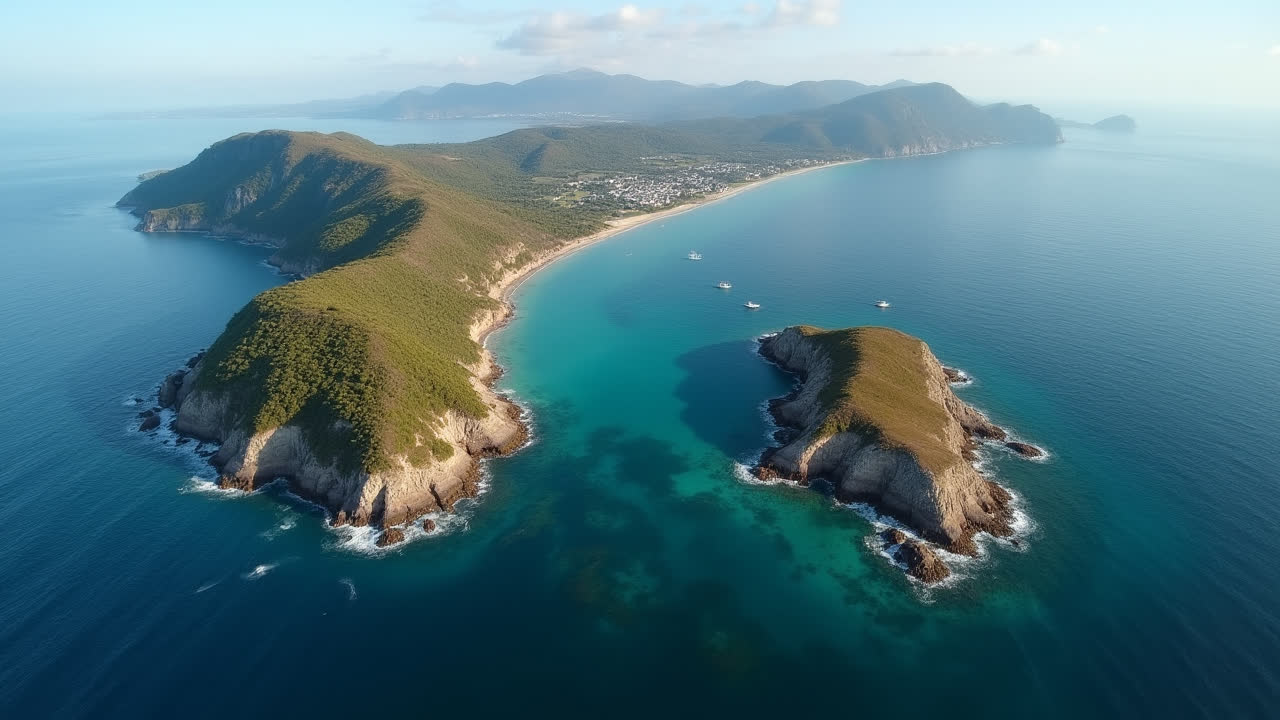
When exploring the world's geography, you'll encounter various landforms surrounded by water. Have you ever wondered about the difference between islands and islets? While both are land masses encircled by water, they're not exactly the same thing. I've always been fascinated by these unique geographical features during my travels, and today I'm sharing what makes each distinct.
Both islands and islets can be found in seas, rivers, and lakes worldwide. Though they share some similarities, understanding their differences helps us appreciate Earth's diverse landscape features. Sometimes when I'm looking at maps, I notice tiny dots in the oceans that don't even have names – those are typically islets rather than full-fledged islands.
In this comprehensive guide, we'll explore what makes islands and islets unique, their characteristics, and the key factors that set them apart. Whether you're a geography enthusiast, a traveler, or simply curious about our planet's features, this article will deepen your understanding of these fascinating landforms.
What Exactly Is an Island?
An island is a body of land completely surrounded by water. Our planet features countless islands scattered across oceans, rivers, and lakes. These geographical wonders vary tremendously in size, climate, and inhabitants. I remember visiting Bali a few years ago and being amazed that such a relatively small land mass could support such rich biodiversity and cultural heritage.
When discussing islands, it's important to note they differ from continents, though both are essentially land areas surrounded by water. The distinction primarily comes down to size – continents are significantly larger. That said, there are exceptions to this general rule. Greenland, for instance, covers approximately 2,166,000 square kilometers, making it three times larger than the Australian continent. Yet, Greenland is classified as an island while Australia is considered a continent. Geography can be confusing sometimes, can't it?
The climate of an island is largely determined by its geographical location. Take the Aleutian Islands in Alaska, for example. These islands experience a cold climate and remain ice-covered throughout the year. In stark contrast, tropical islands like Tahiti enjoy warm temperatures year-round. This climate diversity is one of the fascinating aspects of islands that I've observed in my travels.
Islands also vary dramatically in terms of population and development. Some islands are nothing more than barren stretches of land with sparse vegetation and limited animal species. Others have evolved into countries or major cities with substantial populations. Examples include the Maldives, Sri Lanka, and even Tokyo, which occupies several islands. During my visit to the Maldives, I was impressed by how such small islands could support tourism infrastructure while maintaining their natural beauty.
The Six Main Types of Islands
Islands come in various forms, each with unique origins and characteristics. Geographers typically classify islands into six main categories: continental islands, tidal islands, barrier islands, oceanic islands, coral islands, and artificial islands. Each type tells a different story about Earth's geological processes and sometimes human intervention.
Continental islands were once connected to a continent before being separated through Earth's shifting continental plates. These islands formed when our planet's landmasses broke apart over millions of years. Madagascar and Greenland represent prominent examples of continental islands. Looking at a world map, you can almost see how these large islands might have once fit against their neighboring continents like puzzle pieces.
Tidal islands represent a special subcategory of continental islands. In these cases, the land connection to the mainland hasn't completely eroded away but remains submerged during high tide. Mont Saint-Michel in France provides a captivating example of a tidal island. I visited this magical place once, timing my arrival with the low tide when you can walk across to the island. By afternoon, the rising waters had transformed it back into an island – a truly remarkable transformation to witness!
Barrier islands are narrow stretches of land that lie parallel to coastlines, serving as natural buffers between the ocean and the mainland. These islands play a crucial ecological role in protecting coastal areas from storm surges and erosion. The Outer Banks of North Carolina represent well-known barrier islands in the United States.
Oceanic islands have a fiery origin story, forming from volcanic eruptions on the ocean floor. These dramatic births involve layers of lava building up until they eventually breach the water's surface. When the volcano's peak emerges above the water, an island is born. The Hawaiian Islands represent perhaps the most famous examples of oceanic islands. Standing on a black sand beach in Hawaii once, I couldn't help but marvel at standing on land created entirely by volcanic activity.
Coral islands develop in warm waters through the accumulation of coral reef structures. These living islands depend on the perfect conditions for coral growth. The Great Barrier Reef region features numerous coral islands, some barely breaking the surface.
Finally, artificial islands are human-made constructions created for various purposes. From the famous Palm Islands in Dubai to airport expansions in Japan, these engineering marvels demonstrate humanity's ability to shape geography. I was fortunate enough to see Palm Jumeirah in Dubai, and the scale of human ambition in creating such massive land formations is truly astonishing.
Understanding Islets: Nature's Tiny Islands
An islet represents nature's miniature version of an island – essentially a very small island that typically covers less than one acre of surface area. These diminutive land features often go unnamed on maps and charts due to their limited size and significance. During a boat tour around the Adriatic Sea, our guide pointed out dozens of tiny rocky outcrops barely visible above the water – all technically islets rather than islands.
One defining characteristic of islets is their limited vegetation. Many islets feature little to no plant life, consisting primarily of bare rock, sand, or coral formations. This lack of vegetation makes islets generally unsuitable for human habitation, unlike their larger island counterparts. I've observed tiny islets in lakes that supported nothing more than a few hardy lichens, demonstrating how challenging life can be on these minimal land masses.
Islets can form from various materials, with most composed of rock, sand, or coral deposits. Their existence may be permanent or temporary, with some islets qualifying as tidal – appearing during low tide and submerging during high tide. They can emerge in seas, rivers, lakes, or any substantial body of water. I once watched tidal islets appear and disappear with the changing tides in the Bay of Fundy – a fascinating natural phenomenon that highlights the dynamic nature of these small land formations.
Despite their small size, islets play important ecological roles. They often serve as nesting grounds for seabirds or resting spots for marine mammals. Some rocky islets provide crucial habitat for specialized plant species adapted to harsh conditions. Though tiny in the grand scheme of geography, these features contribute significantly to biodiversity in aquatic ecosystems.
Comparing Islands and Islets: A Detailed Breakdown
Island vs Islet Comparison Table
| Comparison Factor | Islands | Islets |
|---|---|---|
| Definition | Land area completely surrounded by water | Very small, often unnamed island |
| Size | Vary greatly in size (e.g., Greenland: 2,166,000 km²) | Typically less than one acre in area |
| Vegetation | Often support diverse plant life | Little to no vegetation in most cases |
| Population | Can support human habitation (e.g., Maldives, Sri Lanka) | Generally cannot support human settlements |
| Naming Conventions | Usually named and marked on maps | Often unnamed or given informal local designations |
| Permanence | Generally permanent geological features | May be permanent or tidal (disappearing at high tide) |
| Composition | Various geological materials and soil types | Primarily rock, sand, or coral |
| Global Distribution | Found in oceans, seas, lakes, and rivers worldwide | Common in archipelagos, reef systems, and river deltas |
The primary distinction between islands and islets lies in their size. While islands can span from relatively small to incredibly vast areas (with Greenland being larger than many countries), islets are consistently tiny, rarely exceeding one acre in area. This size difference fundamentally influences the other distinguishing characteristics between these landforms.
Vegetation represents another significant differentiator. Islands typically support diverse plant life depending on their climate and soil conditions. In contrast, islets often lack substantial vegetation due to their limited size, exposure to harsh elements, and minimal soil development. I've seen this contrast firsthand when island-hopping in Greece – the difference between lush inhabited islands and barren rocky islets just offshore was striking.
Human habitation potential further separates these landforms. Islands frequently support human populations, with some evolving into nations or major urban centers. Islets, however, generally cannot sustain human settlements due to their limited resources and space. Throughout history, people have gravitated toward islands of sufficient size while leaving islets largely undeveloped.
Naming conventions also differ between islands and islets. Islands typically receive formal names that appear on maps and in geographical records. Islets, being smaller and often less significant, frequently remain unnamed or receive only informal local designations. This naming discrepancy reflects the relative importance humans assign to these different landforms.
Frequently Asked Questions About Islands and Islets
Can an islet grow to become an island over time?
Yes, in some cases, islets can grow into islands through natural processes. This transformation typically occurs through volcanic activity adding new land, coral reef expansion, or sediment accumulation. For example, continuing volcanic eruptions can cause an islet to expand significantly. Similarly, in coral reef systems, ongoing coral growth and sediment trapping can gradually increase an islet's size. However, this process usually takes hundreds or thousands of years under favorable conditions. Climate change and rising sea levels currently threaten this process in many areas, with some islets actually shrinking rather than growing.
What's the difference between an islet and a cay or atoll?
The distinction between islets, cays, and atolls involves specific formation processes and structures. Islets are simply very small islands (less than an acre) regardless of how they formed. Cays (sometimes spelled "keys" as in the Florida Keys) are specifically small, low-elevation sandy islands formed on coral reefs. They develop when ocean currents deposit sand and sediment on reef surfaces. Atolls, meanwhile, are ring-shaped coral reefs that encircle a lagoon partially or completely. They typically form when a coral reef develops around a volcanic island that subsequently subsides beneath the water's surface. While all cays could be considered islets due to their small size, not all islets are cays, and atolls represent complex reef systems rather than simple small islands.
Are there any famous islets worth visiting?
Despite their small size, several islets around the world have gained fame and become tourist attractions. Dunbar Rock in Honduras is a notable limestone islet that hosts a luxury villa resort. Tiny Mouse Island (Pontikonisi) near Corfu, Greece, features a Byzantine monastery and has become an iconic photography spot. Isola Bella in Lake Maggiore, Italy, though small, contains a baroque palace and elaborate gardens. Visovac Island in Croatia's Krka National Park houses a 15th-century monastery despite its miniature dimensions. These famous islets demonstrate that cultural or historical significance can outweigh physical size. Many of these locations offer day trips or tours, though visitors should check seasonal accessibility as some small islets may be difficult to reach during rough weather conditions.
Conclusion: Understanding Earth's Water-Surrounded Landforms
Islands and islets represent fascinating geographical features that enhance our planet's diverse landscape. While both are fundamentally land areas surrounded by water, they differ significantly in key aspects. Size constitutes the primary differentiator – islands can range from modest to massive, while islets consistently remain very small, typically covering less than one acre.
This size distinction influences numerous other characteristics. Islands generally support vegetation and often human populations, with some evolving into nations or major urban centers. Islets typically feature minimal vegetation and cannot sustain human habitation. Islands usually receive formal names and designations on maps, while islets frequently remain unnamed due to their limited significance in human geography.
Understanding the differences between islands and islets enhances our appreciation of Earth's geographical diversity. Next time you're looking at a map or traveling across water bodies, you'll have a deeper understanding of these land formations surrounded by water. The world's geography includes countless examples of both features, each with its own unique story to tell about our planet's geological processes and human history.
Whether examining massive islands like Greenland or tiny unnamed islets in local lakes, these landforms represent important components of Earth's surface features. Their study enriches our understanding of geography, geology, ecology, and human settlement patterns throughout history and across cultures.