Lepidolite vs Amethyst: Key Differences Explained
Lepidolite vs Amethyst: Key Differences Explained
When it comes to beautiful purple gemstones, lepidolite and amethyst often catch the eye of collectors and jewelry enthusiasts alike. While both stones share similar color palettes, they're actually quite different in composition and properties. In fact, the main difference between lepidolite and amethyst is that lepidolite is a lithium-rich mica, while amethyst is a type of quartz crystal. Understanding these differences can help you make informed decisions whether you're shopping for jewelry or expanding your mineral collection.
Understanding Lepidolite: The Lithium-Rich Mica
Lepidolite is truly fascinating mineral that many people overlook. It's technically classified as a lithium-rich aluminium-based mica, which means it contains valuable metals like lithium, caesium, and rubidium. Unlike amethyst, which is considered a precious gemstone, lepidolite is primarily valued as a mineral resource.
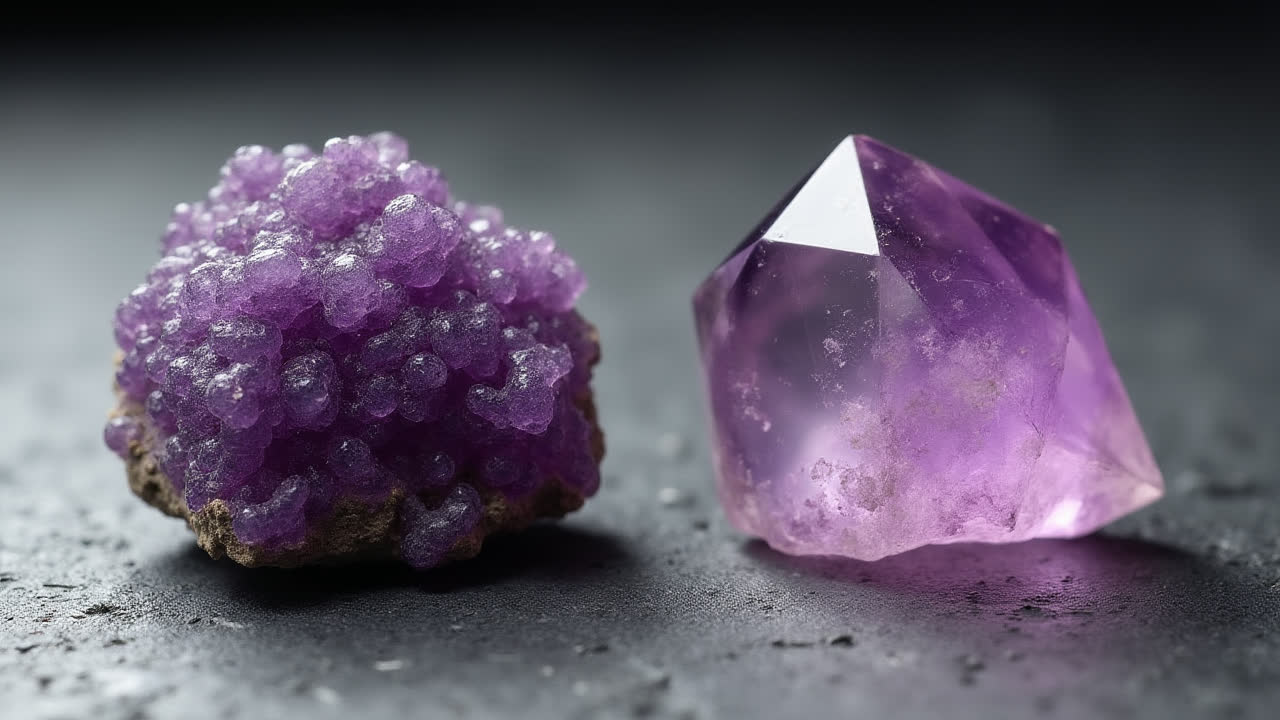
What makes lepidolite so distinctive is its soft, pearly sheen. This pearly lustre comes from the tiny lithium flakes within the mineral, creating an almost shimmering effect when light hits the surface. The stone's soft purple color ranges from delicate lavender pink to deeper violet hues, though it's considerably softer than amethyst.
Speaking of softness, lepidolite scores only 2.5 to 3.5 on the Mohs hardness scale. This means you could literally scratch it with your fingernail! While this makes it challenging for certain types of jewelry, it's perfect for decorative pieces and collectors' items.
Amethyst: The Beloved Purple Quartz
Now here's a gemstone that needs no introduction! Amethyst has been cherished for centuries, and it's easy to see why. As a variety of crystalline quartz, this beautiful gem displays colors ranging from soft lavender to deep reddish-purple. Unlike lepidolite, amethyst forms in large, transparent crystals that make stunning jewelry pieces.
The value of amethyst depends heavily on its color intensity. Those rich, reddish-purple specimens from Siberia are particularly prized by collectors. I've personally seen some breathtaking pieces that can make even seasoned gem enthusiasts gasp in appreciation!
What makes amethyst so popular for jewelry is its impressive hardness rating of 7 on the Mohs scale. This means it's durable enough for rings, bracelets, and necklaces that you can wear daily without worrying about scratches or damage. Plus, amethysts are readily available in large sizes, making them perfect for statement pieces.
Detailed Comparison: Lepidolite vs Amethyst
| Property | Lepidolite | Amethyst |
|---|---|---|
| Mineral Type | Lithium-rich mica | Quartz variety |
| Color Range | Pink to purple | Deep reddish-purple to pale lilac |
| Mohs Hardness | 2.5 to 3.5 | 7 |
| Lustre | Pearly to vitreous | Vitreous |
| Crystal System | Monoclinic | Hexagonal |
| Transparency | Translucent to opaque | Transparent to translucent |
| Primary Use | Collection, decoration | Jewelry, ornaments |
| Availability | Less common | Widely available |
Color Similarities and Differences
Now, this is where things get interesting! Both lepidolite and amethyst share that gorgeous purple color that collectors love, but there are subtle differences worth noting. Lepidolite tends to have a more muted, pastel purple appearance, often with a pinkish undertone that gives it a softer, more ethereal quality.
Amethyst, on the other hand, can display a wider range of purple intensities. From pale lavender that reminds me of spring mornings to deep, royal purple that practically glows under the right lighting. I've noticed that high-quality amethysts have an almost electric quality to their color, while lepidolite maintains that dreamy, misty appearance.
The way light interacts with these stones is quite different too. Amethyst's crystalline structure allows light to pass through cleanly, creating brilliant sparkles and rainbow flashes. Lepidolite, with its layered structure, produces a softer glow that some people find more soothing to look at.
Where Are These Stones Found?
Both minerals have interesting geographical distributions. Lepidolite deposits are found in countries like Brazil, Madagascar, Russia, Canada, and the United States. Brazil seems to produce some of the finest specimens with that perfect balance of color and clarity.
As for amethyst, the best quality stones come from places like Siberia (famous for their deep purple color), Brazil (known for large crystals), Sri Lanka, and various locations in the Far East. It's amazing how geology creates such beautiful minerals in different parts of the world!
Fun fact: Russia's Four Peaks mine in Arizona produces some truly unique amethyst specimens. I've always wanted to visit these localities someday to see these gems in their natural habitat!
Uses and Applications
The different hardness levels really dictate how these stones are used. Amethyst's durability makes it perfect for all types of jewelry - rings, pendants, earrings, bracelets, you name it. Many people wear amethyst daily without any concerns about damage.
Lepidolite, being so soft, requires more careful handling. It's often used in:
- Decorative objects and carvings
- Specimen collections
- Protective pendants (when properly set)
- Tumbled stones for mineral healing enthusiasts
Interestingly, lepidolite isn't just pretty - it's actually a valuable source of lithium, which is increasingly important for battery technology. So while you might not wear it as a ring, it might be powering your smartphone!
Care and Maintenance
Here's where the differences really matter. Amethyst's hardness of 7 means you can clean it with soap and water, even use an ultrasonic cleaner if you're careful. It's pretty resistant to scratches unless it encounters something harder like diamond or sapphire.
Lepidolite, however, needs much gentler care. With its softness of 2.5-3.5, it can be scratched by many common materials. I always recommend storing lepidolite pieces separately, wrapped in soft cloth, and cleaning them only with a damp cloth. Never use any harsh chemicals or ultrasonic cleaning methods!
Both stones should be protected from extreme temperature changes, though amethyst is generally more resilient to environmental factors.
Which One Should You Choose?
The choice between lepidolite and amethyst really depends on what you're looking for. Want something you can wear every day without worry? Amethyst is your best bet. Its durability and wide availability make it practical for all kinds of jewelry.
But if you're drawn to unique minerals with special metaphysical properties (as many crystal enthusiasts are), lepidolite might speak to you more. Its rarity and the fact that it contains lithium give it a special appeal to collectors.
Price-wise, both stones are relatively affordable compared to other gems. However, high-quality amethyst specimens, especially larger ones with deep color, can command impressive prices. Lepidolite generally remains more accessible to casual collectors.
Frequently Asked Questions
Can you wear lepidolite in a ring?
While technically possible, wearing lepidolite in a ring isn't recommended for everyday use. With a hardness of only 2.5-3.5, it's too soft and can easily scratch or chip. Rings constantly come into contact with hard surfaces. If you want to wear lepidolite, opt for pendants or earrings where there's less exposure to impacts.
Which is more valuable: lepidolite or amethyst?
Generally, high-quality amethyst is more valuable than lepidolite, especially large specimens with deep purple color. However, exceptional lepidolite pieces with perfect color and crystal formation can also fetch good prices. The value depends on size, quality, and market demand. Both are considered semi-precious and relatively affordable compared to other gemstones.
How can you tell lepidolite from amethyst?
The easiest way is to test hardness - you can scratch lepidolite with your fingernail, but not amethyst. Visually, lepidolite has a pearly or shimmery appearance with a more muted purple color, while amethyst is transparent and glassy with vibrant purple hues. Lepidolite often shows a flaky or platy structure typical of mica minerals, whereas amethyst forms distinct crystals.