Understanding Morphemes vs Allomorphs: Essential Linguistics Guide
The Basics of Morphology in Linguistics
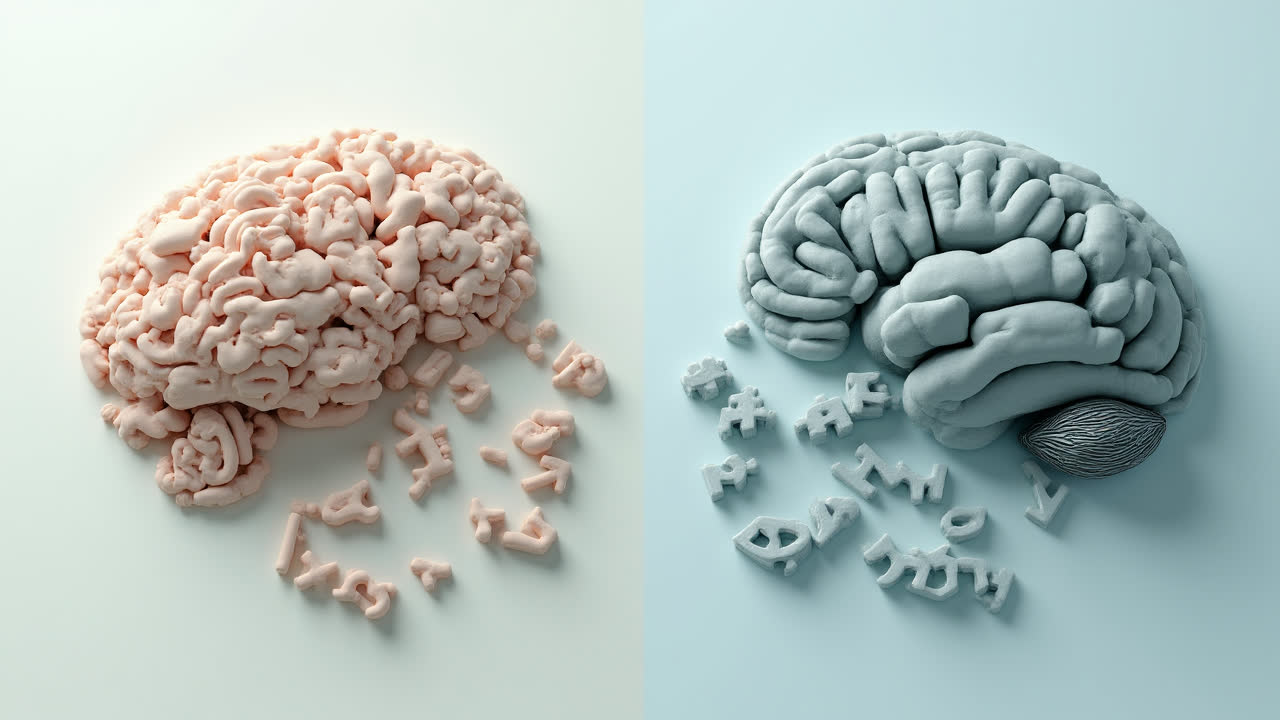
Before diving into the specifics, let's explore the field where these terms belong. Morphology is the fascinating branch of linguistics dedicated to studying words and their internal structure. It examines how words are formed and how their structure relates to their grammatical function. Think of morphology as the anatomy of language—it breaks down words into their smallest meaningful parts to understand how they function.
When I first began studying linguistics, morphology seemed deceptively simple. However, I soon discovered how intricate word formation can be across different languages. English, for instance, builds words quite differently than languages like Finnish or Turkish, which can pack what would be entire English sentences into single, complex words. Isn't it remarkable how languages can vary so drastically in how they construct meaning?
Understanding morphology isn't just academic exercise—it helps explain how we instinctively understand brand new words or why children make predictable "errors" as they learn language. Remember how kids might say "goed" instead of "went"? That's morphology in action! They're applying regular patterns to irregular cases, showing they've internalized morphological rules.
The relationship between sound and meaning in words isn't random, and morphology helps us decode these patterns. Whether you're learning a new language, studying linguistics, or simply curious about how words work, grasping these fundamental concepts will enhance your understanding of language structure.
What is a Morpheme? The Building Block of Language
A morpheme is the smallest meaningful unit in a language that cannot be divided further without losing its meaning. I like to think of morphemes as the linguistic atoms—they're the basic building blocks that combine to create the vast vocabulary we use. Unlike syllables, which are units of pronunciation, morphemes carry meaning and contribute to a word's overall sense.
Morphemes fall into two main categories: free morphemes and bound morphemes. Free morphemes can stand alone as complete words. For example, in the term "unhappiness," "happy" is a free morpheme because it can exist independently and still maintain its meaning. Other examples include "dog," "run," "blue," and "think." These are all words that don't need additional elements to make sense.
On the other hand, bound morphemes must attach to other morphemes to have meaning. They cannot exist as standalone words. In "unhappiness," both "un-" and "-ness" are bound morphemes. You can't use them independently in a sentence. I remember struggling with this concept until my linguistics professor gave us a simple test: "Can you say this part alone in a sentence?" If not, it's probably a bound morpheme.
Examples of Free Morphemes:
- cat, dog, house (nouns)
- run, jump, swim (verbs)
- red, tall, happy (adjectives)
- quickly, often, well (adverbs)
Bound morphemes further divide into two important subcategories: derivational and inflectional morphemes. Derivational morphemes change the meaning or word class of a base word. When we add "-er" to "teach" to get "teacher," we've changed both the meaning (from an action to a person who performs that action) and the word class (from verb to noun). Similarly, adding "un-" to "happy" creates "unhappy," significantly altering the meaning while keeping the same word class.
Inflectional morphemes, by contrast, don't change the core meaning or word class. They simply provide grammatical information such as tense, number, or possession. When I add "-s" to "dog" to create "dogs," I'm showing plurality but not changing what a dog is. Similarly, adding "-ed" to "walk" gives us "walked," indicating past tense without changing the basic meaning of the action.
Common Inflectional Morphemes in English:
- -s/-es (plural: cars, boxes)
- -'s (possessive: John's)
- -ed (past tense: walked)
- -ing (progressive: running)
- -er/-est (comparative/superlative: taller, tallest)
What is an Allomorph? Variations in Sound
While teaching a linguistics workshop last year, I noticed how confused students became when we moved from morphemes to allomorphs. An allomorph is essentially a variant form of a morpheme—the same unit of meaning that changes its pronunciation depending on its phonetic environment. The fascinating part about allomorphs is that they maintain identical meaning despite sounding different.
Think of allomorphs as different costumes for the same actor. The actor (the morpheme) remains the same, but they change their appearance (sound) based on the scene (phonetic context). This concept fascinates me because it reveals how language adapts for easier pronunciation while preserving meaning.
One perfect example is the English plural morpheme, typically written as "-s." Despite having a single written form, this morpheme actually has three distinct pronunciations or allomorphs:
- /s/ as in "cats" /kæts/
- /z/ as in "dogs" /dɒgz/
- /ɪz/ as in "horses" /hɔːrsɪz/
What determines which allomorph appears? It's all about the sound that comes before it. After voiceless consonants like /p/, /t/, or /k/, we use the /s/ allomorph. After voiced consonants like /b/, /d/, or /g/ and vowels, we use the /z/ allomorph. And after sibilant consonants like /s/, /z/, /ʃ/, /ʒ/, /tʃ/, or /dʒ/, we use the /ɪz/ allomorph.
The past tense morpheme "-ed" follows similar patterns with its three allomorphs:
- /t/ as in "jumped" /dʒʌmpt/
- /d/ as in "called" /kɔːld/
- /ɪd/ as in "wanted" /wɒntɪd/
What I find particularly interesting is that native speakers use these variations automatically without conscious thought. We don't learn these rules explicitly; our brains naturally apply them based on what's easiest to pronounce in sequence. This phonological conditioning demonstrates language's inherent efficiency—we adapt pronunciation for ease while maintaining consistent meaning.
Key Differences Between Morphemes and Allomorphs
After explaining morphemes and allomorphs separately, students often ask me, "But what's the fundamental difference between them?" The answer lies in their function and focus. While they're related concepts, they address different aspects of language:
| Aspect | Morpheme | Allomorph |
|---|---|---|
| Definition | Smallest meaningful unit in language | Variant pronunciation of a morpheme |
| Primary Focus | Meaning and structure | Sound variation |
| Function | Carries semantic or grammatical meaning | Adapts pronunciation for phonetic context |
| Independence | Can be free (standalone) or bound (attached) | Always variants of a specific morpheme |
| Relationship | Basic unit | Variant of a morpheme |
| Examples | "un-", "-ness", "dog", "run" | /s/, /z/, /ɪz/ as variants of plural "-s" |
| Analysis Level | Primarily morphological | Morphophonological (intersection of morphology and phonology) |
| Change Over Time | Generally stable in meaning | May evolve based on pronunciation trends |
I've found that the most straightforward way to remember the difference is this: morphemes are about what meaning is conveyed, while allomorphs are about how that meaning sounds in different environments. A morpheme focuses on the unit of meaning itself, while an allomorph focuses on the phonetic realization of that unit.
This distinction helps explain why we can recognize the same grammatical feature (like plural) across different words, even when it sounds different. Your brain processes "cats" and "dogs" as containing the same plural marker, despite the different pronunciations of the final sounds.
Practical Applications in Language Learning and Teaching
Understanding morphemes and allomorphs isn't just theoretical linguistic knowledge—it has practical applications in how we learn and teach languages. As someone who's taught English to non-native speakers, I've seen firsthand how this knowledge can dramatically improve language acquisition.
For language learners, recognizing common morphemes helps build vocabulary more efficiently. Rather than memorizing each word as an isolated unit, learners can identify patterns. If you know that "un-" typically means "not" or "opposite of," and you know the word "happy," you can deduce that "unhappy" means "not happy." This pattern recognition accelerates vocabulary acquisition and improves retention.
Teachers can leverage morpheme awareness to help students understand word families and spelling patterns. I remember working with a student who struggled with spelling until we broke words down into their morphemes. Suddenly, "disappointment" wasn't a 13-letter challenge but a combination of familiar parts: "dis-" + "appoint" + "-ment."
Awareness of allomorphs helps with pronunciation and listening comprehension. Many pronunciation difficulties stem from not recognizing how morphemes change their sound in different contexts. English learners often struggle with the three different pronunciations of "-ed" endings until they understand the allomorph patterns. Once they grasp the rule that voiced consonants are followed by /d/ and voiceless consonants by /t/, their pronunciation naturally improves.
These concepts also play a crucial role in natural language processing and computational linguistics. Speech recognition systems and machine translation programs rely on understanding both the meaning units of language and their variable pronunciations. Advances in these fields have been possible partly due to improved modeling of morphological and phonological patterns.
Frequently Asked Questions About Morphemes and Allomorphs
How do morphemes differ from syllables?
Morphemes and syllables serve entirely different linguistic functions. Morphemes are units of meaning, while syllables are units of pronunciation. A word like "unhappy" has three syllables (un-hap-py) but only two morphemes ("un-" and "happy"). Similarly, a single-syllable word like "cats" contains two morphemes ("cat" and the plural "-s"). Syllable divisions are based on pronunciation patterns and can cross morpheme boundaries, which is why understanding both concepts separately is important for comprehensive language analysis.
Why do languages develop allomorphs instead of using consistent forms?
Allomorphs typically develop as a result of ease of articulation and natural phonological processes. Languages tend to evolve towards pronunciation patterns that require less articulatory effort when sounds are combined. For example, pronouncing the plural in "cats" as /s/ rather than /z/ is physically easier because both /t/ and /s/ are voiceless consonants, requiring similar vocal cord positions. This phenomenon, called assimilation, is common across languages and represents a balance between maintaining meaning and minimizing pronunciation effort. Over time, these pronunciation shortcuts become standardized as regular allomorphic patterns within the language.
How do morphemes and allomorphs vary across different languages?
The morphological systems of languages vary enormously worldwide. While English is moderately synthetic (combining several morphemes into words), languages like Finnish or Turkish are highly agglutinative, stringing many morphemes together to create complex words that express what might require entire sentences in English. On the allomorph front, languages differ in how phonetically conditioned their variants are. Some languages have very regular allomorphic patterns based on straightforward phonological rules, while others have complex historical patterns that don't follow clear contemporary phonological principles. These variations reflect each language's unique evolutionary path and phonological constraints, making comparative morphology a fascinating field of study.
Conclusion: The Interplay Between Form and Meaning
The study of morphemes and allomorphs reveals the beautiful complexity of human language. These concepts show us how languages balance the need for consistent meaning with the practical realities of pronunciation. Morphemes give us the building blocks of meaning, while allomorphs demonstrate language's adaptability to phonetic contexts.
I'm continually amazed by how we navigate these linguistic complexities effortlessly in our daily communication. We don't consciously think about which allomorph of the plural morpheme to use—we simply choose the one that flows naturally with the preceding sounds. This intuitive knowledge is a testament to the remarkable language capacity we all possess.
Whether you're a language student, teacher, or enthusiast, understanding these fundamental concepts provides deeper insight into how languages work. It helps explain why languages have both regularities and irregularities, and why we can recognize patterns even amidst variations in form. The next time you hear someone adding an "-s" to make a word plural, remember that you're witnessing the fascinating interplay between morphemes and allomorphs—a small but significant demonstration of language's elegant design.