Nerves vs Blood Vessels: 12 Critical Differences Explained
Our bodies are intricate networks of various systems working together to maintain life. Two of the most fascinating tubular structures in our anatomy are nerves and blood vessels. While both transport essential materials throughout our bodies, they serve entirely different purposes and belong to separate body systems. Have you ever wondered how signals from your brain reach your fingers within milliseconds? Or how oxygen travels from your lungs to every cell in your body?
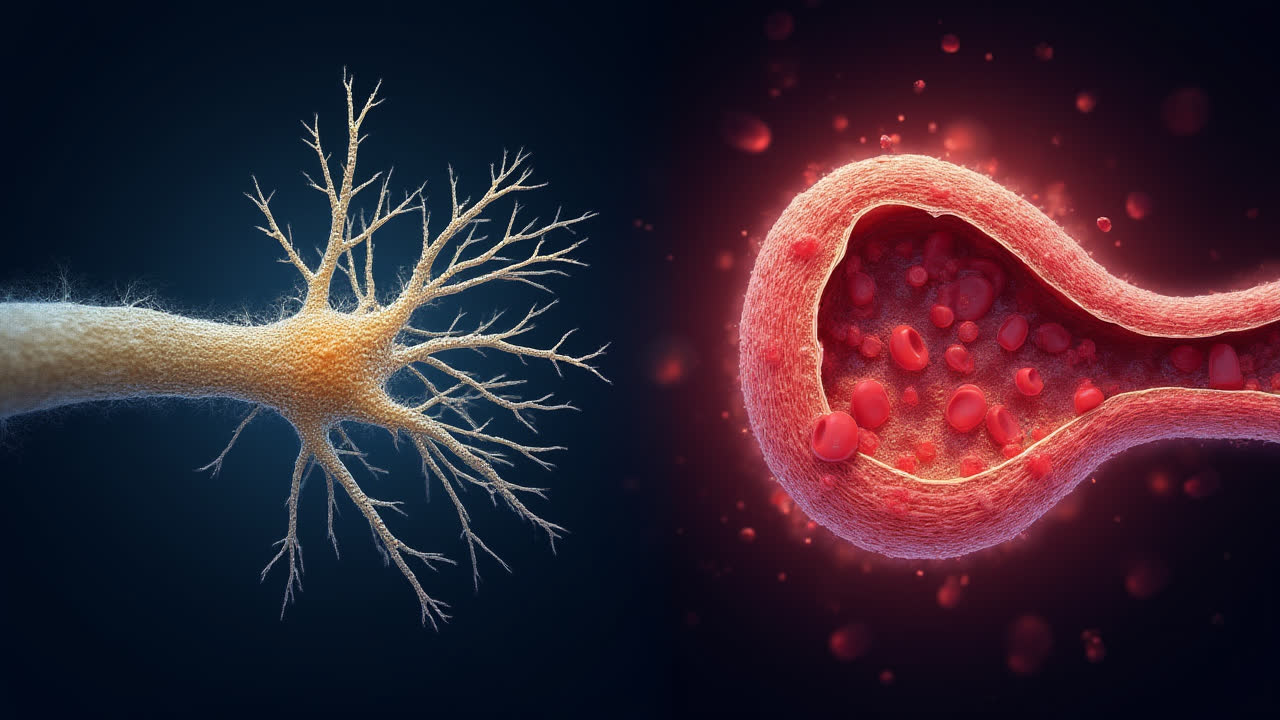
Nerves and blood vessels are often found running closely together throughout the body, yet they function in completely different ways. Nerves transmit electrical signals for sensation and movement, while blood vessels transport the life-sustaining fluid that carries oxygen and nutrients. Understanding the difference between these vital systems helps us appreciate the amazing complexity of human anatomy.
In this comprehensive comparison, we'll explore the key differences between nerves and blood vessels, examining their structures, functions, and roles in keeping us alive and functioning. Whether you're a student, healthcare professional, or simply curious about how your body works, this article will provide valuable insights into these essential anatomical components.
What Are Nerves? Structure and Function
Nerves are cable-like bundles of nerve fibers that form the communication network of our body. They serve as the pathway for electrochemical impulses traveling to and from the brain and spinal cord. These whitish or yellowish fibers are components of the peripheral nervous system, extending from the central nervous system (brain and spinal cord) to every part of the body.
The structure of a nerve is quite complex. At the microscopic level, nerves consist primarily of axons from neurons, which are the long projections that conduct electrical impulses. These axons are supported by specialized cells called Schwann cells, which produce the myelin sheath that insulates and protects the axons. This insulation significantly increases the speed of nerve impulse transmission. The entire nerve is wrapped in several layers of connective tissue: endoneurium surrounding individual axons, perineurium bundling groups of axons together, and epineurium covering the entire nerve.
Based on the direction of impulse transmission, nerves can be classified into three main types. Sensory nerves (afferent) carry information from sensory receptors to the central nervous system. Motor nerves (efferent) transmit signals from the central nervous system to muscles and glands. Mixed nerves contain both sensory and motor fibers, allowing for bidirectional communication within the same bundle. Additionally, nerves can be categorized by their origin as either cranial nerves (arising from the brain) or spinal nerves (emerging from the spinal cord).
The primary function of nerves is to facilitate rapid communication throughout the body. When you accidentally touch a hot surface, sensory nerves instantly relay pain signals to your brain, which then sends commands through motor nerves to pull your hand away—all happening within a fraction of a second. This remarkable speed and precision allow for the coordination of bodily functions and appropriate responses to internal and external stimuli.
What Are Blood Vessels? Types and Functions
Blood vessels are the tubular structures that form the transportation network of the circulatory system. Unlike nerves, which are solid structures, blood vessels are hollow tubes designed specifically to carry blood throughout the body. This network ensures that oxygen, nutrients, hormones, and immune cells reach every tissue while removing waste products and carbon dioxide.
There are three main types of blood vessels, each with unique structures suited to their specific functions. Arteries carry oxygen-rich blood away from the heart to body tissues. Their walls are thick and elastic, allowing them to withstand the high pressure of blood pumped by the heart. As arteries move further from the heart, they branch into smaller vessels called arterioles. Veins, on the other hand, return oxygen-depleted blood to the heart. They have thinner walls than arteries and contain valves to prevent the backflow of blood as it moves against gravity. Small venules collect blood from tissues and gradually merge to form larger veins.
Capillaries are the smallest and most numerous blood vessels, forming the vital connection between arterioles and venules. These microscopic vessels have walls just one cell thick, allowing for the efficient exchange of materials between blood and surrounding tissues. Oxygen, nutrients, and other essential substances diffuse from the blood through capillary walls into tissue fluid, while carbon dioxide and waste products move in the opposite direction.
The structure of blood vessels varies according to their function. Arteries and veins have three distinct layers: the tunica intima (inner layer of endothelial cells), the tunica media (middle layer of smooth muscle and elastic tissue), and the tunica adventitia (outer layer of connective tissue). The tunica media is thickest in arteries, providing the strength and elasticity needed to handle high-pressure blood flow. In veins, the tunica adventitia is the thickest layer, offering structural support. Capillaries consist solely of a single layer of endothelial cells, maximizing permeability for efficient exchange.
Blood flow through vessels is regulated by the autonomic nervous system, which controls the contraction and relaxation of smooth muscle in vessel walls. This regulation allows the body to direct blood to areas with the greatest need, such as muscles during exercise or the digestive system after eating. The remarkable network of blood vessels in an adult human would stretch approximately 60,000 miles if laid end to end—enough to circle the Earth more than twice!
Comparing Nerves and Blood Vessels: Key Differences
| Characteristic | Nerves | Blood Vessels |
|---|---|---|
| Basic Structure | Solid bundles of nerve fibers | Hollow tubular structures |
| Body System | Peripheral nervous system | Circulatory system |
| Cellular Composition | Neurons and Schwann cells | Endothelial cells and smooth muscle cells |
| Main Types | Sensory, motor, and mixed nerves | Arteries, veins, and capillaries |
| Primary Function | Transmit electrochemical signals | Transport blood throughout the body |
| Content Carried | Electrical impulses | Blood (nutrients, oxygen, waste products) |
| Appearance | Whitish or yellowish fibers | Arteries appear red; veins appear blue |
| Branching | Limited branching | Extensive branching network |
| Insulation | Myelin sheath for insulation | No insulation needed |
| Interconnection | Do not form an interconnected network | Form a continuous circulatory loop |
| Layers | Endoneurium, perineurium, epineurium | Tunica intima, media, and adventitia |
| Response Time | Milliseconds (very fast) | Seconds to minutes (relatively slower) |
Similarities Between Nerves and Blood Vessels
Despite their many differences, nerves and blood vessels do share some notable similarities. Both are tubular structures that transport essential materials throughout the body. They often run parallel to each other, with major nerve pathways frequently accompanied by important blood vessels. This anatomical arrangement is not coincidental—it reflects the evolutionary efficiency of routing these critical systems along similar paths.
Both systems also feature unidirectional flow. Nerve impulses travel in specific directions (either toward or away from the central nervous system), while blood flows in a continuous circuit from the heart to tissues and back again. Additionally, both nerves and blood vessels are surrounded by protective connective tissue layers that provide structural support and protection from damage.
Another similarity is that both systems are highly specialized based on their functions. Just as nerves are classified as sensory, motor, or mixed based on the signals they carry, blood vessels are differentiated as arteries, veins, or capillaries according to their role in blood circulation. This specialization allows for optimal performance of each component within its respective system.
Interestingly, there is also a functional relationship between these two systems. The autonomic nervous system directly regulates blood vessel diameter through vasoconstriction and vasodilation, controlling blood flow to different body regions. Meanwhile, blood vessels supply nerves with the oxygen and nutrients required for their proper functioning. This interdependence highlights how different body systems work together to maintain overall health and homeostasis.
The Clinical Significance of Understanding Nerves and Blood Vessels
Understanding the differences between nerves and blood vessels has significant implications in clinical medicine. Disorders affecting these systems present with distinct symptoms and require different treatment approaches. Nerve-related conditions such as neuropathy, neuralgia, or nerve compression syndromes typically manifest as pain, numbness, tingling, or muscle weakness in specific body regions. In contrast, vascular disorders like atherosclerosis, thrombosis, or aneurysms often present with symptoms related to compromised blood flow, such as pain, swelling, skin color changes, or in severe cases, tissue damage.
In surgical procedures, distinguishing between nerves and blood vessels is absolutely critical. Accidental damage to a major nerve can result in permanent loss of sensation or movement in the affected area, while injury to a blood vessel may cause significant bleeding or ischemia. Surgeons must have intimate knowledge of anatomical relationships to protect these vital structures during operations. Modern techniques like nerve-sparing surgeries have been developed specifically to preserve neurological function while treating conditions like prostate cancer or hernias.
Diagnostic imaging techniques also rely on the different properties of nerves and blood vessels. Angiography, for instance, uses contrast agents to visualize blood vessels, allowing for the detection of blockages, aneurysms, or abnormal vessel formations. Nerve conduction studies and electromyography, on the other hand, assess the electrical activity and function of nerves and muscles, helping diagnose conditions like carpal tunnel syndrome or Guillain-Barré syndrome.
Medical treatments often target these systems differently as well. Medications for vascular conditions might focus on blood pressure regulation, preventing clot formation, or reducing cholesterol levels. In contrast, nerve-related therapies might include pain modulators, anti-inflammatory drugs, or interventions aimed at reducing pressure on compressed nerves. Understanding the fundamental differences between these systems guides appropriate medical management and improves patient outcomes.
Frequently Asked Questions
How do nerves and blood vessels interact with each other?
Nerves and blood vessels have a symbiotic relationship in the body. Blood vessels provide nerves with oxygen and nutrients essential for their functioning, while nerves (specifically the autonomic nervous system) regulate blood vessel diameter through vasoconstriction and vasodilation. This neural control allows for precise adjustment of blood flow to different body regions based on changing physiological needs. Additionally, nerves and blood vessels often travel together in neurovascular bundles, sharing protective connective tissue coverings. Disorders in one system can affect the other—for instance, diabetic neuropathy often develops alongside vascular damage, and certain nerve injuries can cause vascular symptoms due to disruption of vasomotor control.
Can damage to nerves affect blood vessels and vice versa?
Yes, damage to either system can certainly affect the other. When nerves controlling blood vessels are damaged (such as in autonomic neuropathy), the affected vessels lose their normal regulation, potentially leading to issues with blood pressure control, thermoregulation, or tissue perfusion. Conversely, when blood vessels are damaged or blocked, the nerves they supply may become ischemic and function poorly. This is evident in conditions like diabetic neuropathy, where microvascular damage contributes to nerve injury. Trauma that severs both nerves and blood vessels (as in some severe injuries) requires emergency repair of both structures to preserve function. The close anatomical relationship between these systems means that therapeutic interventions often need to address both neural and vascular components for optimal healing.
What are the most common disorders affecting nerves and blood vessels?
Common nerve disorders include peripheral neuropathy (often due to diabetes or vitamin deficiencies), carpal tunnel syndrome (compression of the median nerve), sciatica (irritation of the sciatic nerve), Bell's palsy (facial nerve dysfunction), and various forms of neuralgia (nerve pain). For blood vessels, prevalent conditions include atherosclerosis (hardening and narrowing of arteries), hypertension (high blood pressure), deep vein thrombosis (blood clots in veins), varicose veins (enlarged, twisted veins), and aneurysms (bulging blood vessel walls). Some conditions affect both systems simultaneously, such as diabetic neuropathy and vasculopathy, Raynaud's phenomenon (abnormal nerve signals causing blood vessel constriction), and certain autoimmune diseases like vasculitis. Treatment approaches vary widely depending on the specific disorder but may include medications, lifestyle modifications, physical therapy, or surgical interventions.
Conclusion
Nerves and blood vessels represent two fundamental but distinct transportation systems within the human body. While nerves form the communication network that transmits electrochemical signals between the brain and body tissues, blood vessels create the circulatory pathways through which life-sustaining blood travels. Their differences in structure, function, and organization reflect their specialized roles in maintaining bodily homeostasis.
Understanding these differences is not merely an academic exercise but has practical applications in medicine, surgery, and disease management. The intimate relationship between these systems—with nerves regulating blood vessel diameter and blood vessels supplying nerves with essential nutrients—demonstrates the remarkable interconnectedness of human physiology.
As medical science continues to advance, this knowledge drives innovations in diagnostic techniques, surgical approaches, and therapeutic interventions for conditions affecting both nervous and circulatory systems. Whether you're a healthcare professional, student, or simply curious about human anatomy, appreciating the unique characteristics of nerves and blood vessels provides valuable insight into how our bodies function in health and disease.