Nonsense vs Missense Mutations: Key Differences Explained
When studying genetics and molecular biology, understanding the different types of mutations is crucial for grasping how genetic disorders develop and how they affect protein production. Among the various types of DNA mutations, nonsense and missense mutations are two critical point mutations that can significantly impact cellular function and organism health. These single nucleotide substitutions can lead to diverse consequences ranging from minor protein alterations to severe genetic disorders.
Have you ever wondered why some genetic changes cause devastating diseases while others barely have any effect? The answer often lies in understanding exactly what happens at the molecular level when these mutations occur. In this comprehensive guide, we'll explore the fundamental differences between nonsense and missense mutations, their mechanisms, effects on protein synthesis, and the genetic disorders associated with each.
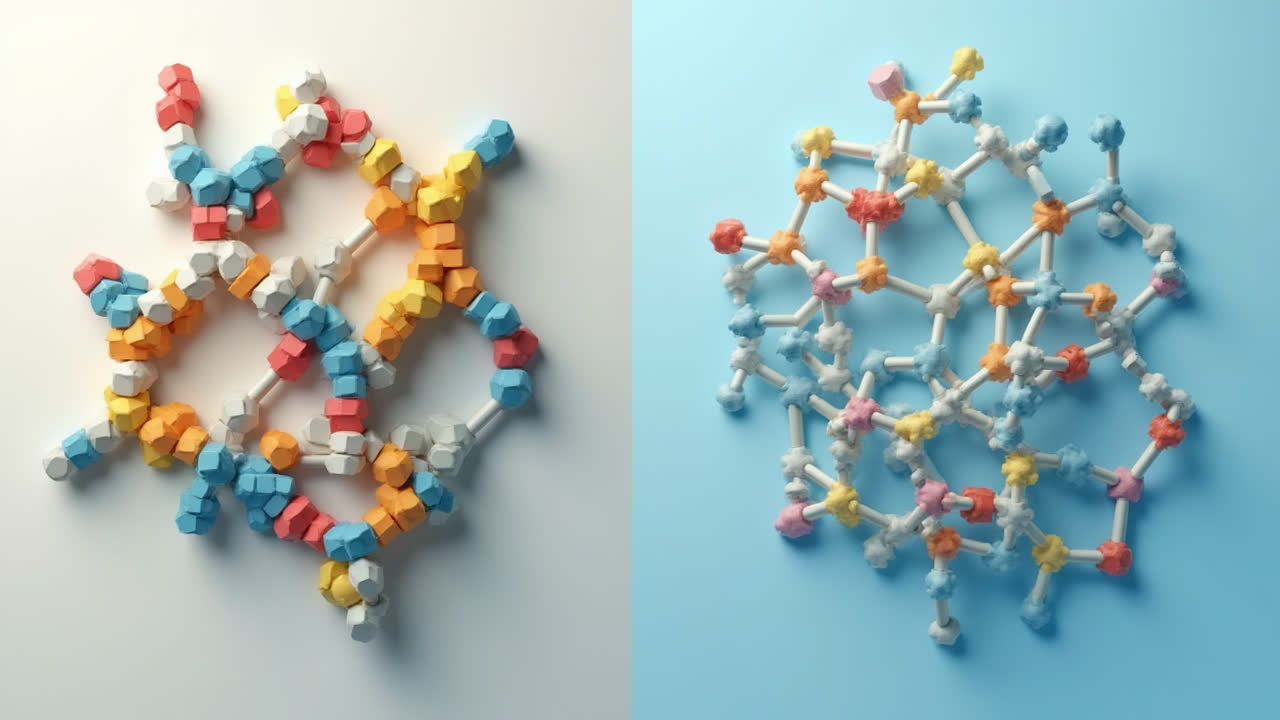
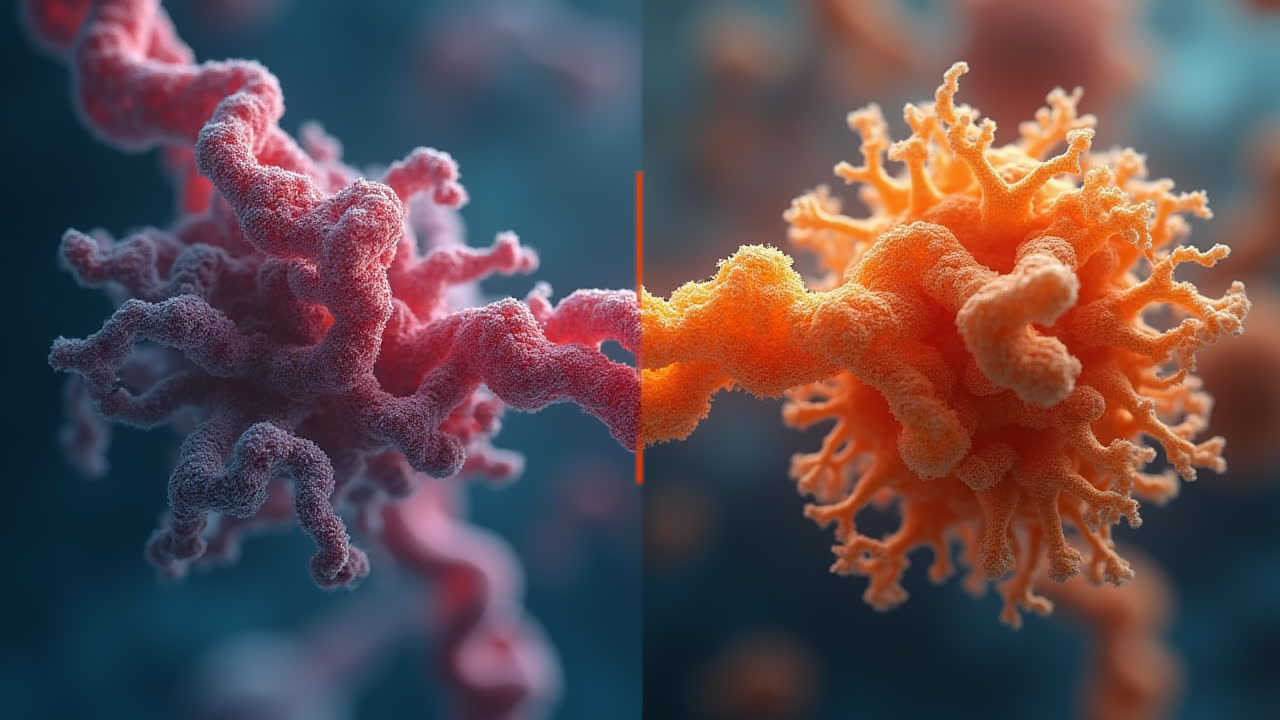
Both nonsense and missense mutations are point mutations involving the substitution of a single nucleotide in the DNA sequence. However, they differ significantly in how they affect protein synthesis and cellular function. While nonsense mutations lead to premature protein termination, missense mutations result in the substitution of one amino acid for another.
Understanding Point Mutations
Before diving into the specific differences between nonsense and missense mutations, it's essential to understand what point mutations are. Point mutations are the simplest form of genetic mutation, involving a change in a single nucleotide base in the DNA sequence. These seemingly small changes can have profound effects on protein structure and function.
Point mutations occur naturally during DNA replication, with an error rate of approximately 5-10%. Fortunately, our cells have sophisticated repair mechanisms, including the 3' to 5' exonuclease activity of DNA polymerase, which can correct many of these errors before they become permanent changes. However, when these repair mechanisms fail, mutations can persist and potentially cause problems.
Several factors can cause point mutations, including errors during DNA replication, exposure to chemical mutagens (like base analogues, deaminating agents, and alkylating agents), and physical mutagens such as radiation and heat. Our DNA repair systems—including direct repair, excision repair, and mismatch repair—work continuously to fix these mutations, but they aren't always successful.
The consequences of point mutations depend largely on where they occur in the genome and what specific changes they introduce to the genetic code. Point mutations in non-coding regions might have little to no effect, while those in critical coding regions can disrupt essential protein functions. Among the most significant types of point mutations are nonsense and missense mutations, which we'll explore in detail.
What is a Nonsense Mutation?
A nonsense mutation occurs when a single nucleotide substitution changes a codon that normally specifies an amino acid into a premature stop codon. In standard genetic code, there are three stop codons: TAG (amber), TAA (ochre), and TGA (opal or umber). When one of these stop codons appears unexpectedly in the middle of a gene's coding sequence, protein synthesis terminates prematurely at that point.
The mechanism of nonsense mutations is straightforward but devastating for protein production. When the ribosome encounters a stop codon during translation, it releases the partially synthesized protein chain, resulting in a truncated product. Since proteins typically need their complete structure to function properly, these truncated proteins are usually non-functional. Think of it like abruptly ending a sentence in the middle—the meaning is often lost entirely.
The severity of a nonsense mutation's effect depends largely on where within the gene it occurs. Mutations near the beginning of the gene sequence will result in severely truncated proteins missing most of their functional domains. In contrast, mutations near the end might produce proteins that retain most of their functionality. In some cases, cells have mechanisms like nonsense-mediated decay (NMD) that can identify and degrade mRNAs containing premature stop codons, preventing the production of potentially harmful truncated proteins.
Nonsense mutations are associated with numerous genetic disorders, including cystic fibrosis, beta-thalassemia, Duchenne muscular dystrophy (DMD), Hurler syndrome, and Dravet syndrome. In many of these conditions, the lack of functional protein leads to severe clinical manifestations that can be life-threatening or significantly impact quality of life.
What is a Missense Mutation?
Unlike nonsense mutations, missense mutations don't introduce stop codons. Instead, a missense mutation occurs when a single nucleotide substitution changes a codon to one that encodes a different amino acid. This results in an altered protein that contains a different amino acid at the position where the mutation occurred. These are also called non-synonymous substitutions because they change the amino acid sequence of the protein.
The effects of missense mutations can vary dramatically depending on the specific amino acid substitution. In some cases, the new amino acid might have similar chemical properties to the original one—what's known as a conservative mutation. For example, if one hydrophobic amino acid is substituted for another hydrophobic amino acid, the protein might retain most of its structure and function. These conservative changes often have minimal impact on protein function.
On the other hand, non-conservative mutations involve the substitution of an amino acid with another that has significantly different properties. For instance, replacing a hydrophobic amino acid with a charged one can dramatically alter protein folding and function. These non-conservative changes are more likely to disrupt protein function and cause disease.
Interestingly, missense mutations can sometimes lead to gain-of-function effects, where the mutated protein acquires new capabilities not present in the original protein. Alternatively, they can cause loss-of-function effects, where the protein loses its normal activity. The diversity of possible outcomes makes missense mutations particularly complex to study and predict.
Numerous genetic disorders are associated with missense mutations, including sickle-cell disease (where a single amino acid substitution in hemoglobin causes the protein to polymerize under certain conditions), Epidermolysis bullosa, and superoxide dismutase 1 (SOD1) mediated amyotrophic lateral sclerosis (ALS). The specific clinical manifestations depend on which protein is affected and how the mutation alters its function.
Comprehensive Comparison of Nonsense vs Missense Mutations
| Characteristic | Nonsense Mutation | Missense Mutation |
|---|---|---|
| Definition | A mutation that changes a sense codon to a stop codon | A mutation that changes a codon to specify a different amino acid |
| Codon Change | Introduces TAG, TAA, or TGA stop codons | Changes to a codon specifying a different amino acid |
| Effect on Translation | Premature chain termination | Incorporation of a different amino acid |
| Protein Product | Truncated, incomplete protein | Full-length protein with amino acid substitution |
| Functional Impact | Usually results in non-functional protein | May be functional, partially functional, or non-functional |
| Severity | Generally more severe, especially if early in the gene | Variable severity depending on amino acid change |
| Associated Disorders | Cystic fibrosis, beta-thalassemia, Duchenne muscular dystrophy | Sickle-cell disease, Epidermolysis bullosa, SOD1-mediated ALS |
| Potential Effects | Almost always loss-of-function | Can cause gain-of-function, loss-of-function, or neutral effects |
Similarities Between Nonsense and Missense Mutations
While we've focused on the differences, nonsense and missense mutations also share several important similarities. Both are types of point mutations, involving changes to a single nucleotide in the DNA sequence. They both alter the codon sequence, potentially affecting the resulting protein's structure and function.
Both mutation types can arise from the same causes: errors during DNA replication, exposure to chemical mutagens, or damage from physical mutagens like radiation. Our cellular repair mechanisms treat both types similarly, attempting to correct the mutations before they cause problems. When these repair systems fail, both mutation types can persist and potentially lead to genetic disorders.
It's worth noting that both nonsense and missense mutations can be inherited from parents or arise spontaneously (de novo mutations). Their effects can range from being completely benign to causing severe disease, depending on which gene is affected and where in the gene the mutation occurs. Understanding these similarities helps provide context for appreciating their critical differences.
Clinical Significance and Genetic Disorders
The clinical significance of nonsense and missense mutations extends far beyond academic interest—these mutations are responsible for numerous genetic disorders that affect millions of people worldwide. Understanding the specific type of mutation involved in a genetic disorder can help researchers develop targeted treatments.
Nonsense mutations are particularly notorious for causing severe genetic disorders. For example, approximately 10% of cystic fibrosis cases are caused by nonsense mutations in the CFTR gene. Duchenne muscular dystrophy, a devastating muscle-wasting disease, often results from nonsense mutations in the dystrophin gene. In recent years, therapeutic approaches specifically targeting nonsense mutations have been developed, including read-through therapies that allow the ribosome to bypass premature stop codons.
Missense mutations, with their variable effects, are implicated in numerous disorders with varying severity. The classic example is sickle-cell disease, where a single missense mutation (GAG to GTG) in the beta-globin gene results in the substitution of glutamic acid with valine. This seemingly small change causes hemoglobin molecules to polymerize under low-oxygen conditions, leading to the characteristic sickle shape of red blood cells and subsequent complications.
Interestingly, some genetic disorders can be caused by both nonsense and missense mutations in the same gene, though the clinical presentation might differ depending on the specific mutation type. This variability highlights the complexity of genetic disorders and the importance of precise genetic diagnosis for optimal treatment planning.
Frequently Asked Questions
Can nonsense and missense mutations be repaired naturally?
Yes, both nonsense and missense mutations can potentially be repaired by the body's natural DNA repair mechanisms. These include direct repair, excision repair, and mismatch repair systems. However, these systems aren't perfect and some mutations escape repair. Once a mutation is established in a cell lineage, it generally cannot be spontaneously corrected without intervention. For mutations in germline cells (eggs and sperm), the mutations can be passed to offspring. Modern gene therapy approaches aim to correct these mutations in affected individuals.
Which is more dangerous: nonsense or missense mutations?
Generally, nonsense mutations are considered more likely to cause severe effects because they result in truncated proteins that are usually non-functional. However, this isn't always the case. A missense mutation that changes a critical amino acid in an enzyme's active site might completely eliminate function, while a nonsense mutation near the end of a protein might result in a nearly full-length protein that retains most functionality. The "danger" of a mutation depends on which gene is affected, where in the gene the mutation occurs, and what specific change takes place. Both types can cause severe genetic disorders under certain circumstances.
Are there treatments that target specific mutation types?
Yes, researchers have developed mutation-specific therapeutic approaches. For nonsense mutations, read-through therapies like Ataluren (PTC124) aim to allow the ribosome to bypass premature stop codons and produce full-length proteins. For certain missense mutations, chaperone therapies can help mutated proteins fold correctly and restore some functionality. Gene therapy approaches, including CRISPR-Cas9 gene editing, offer the potential to correct both types of mutations at the DNA level. RNA-based therapies like antisense oligonucleotides and RNA interference can also modulate the effects of both mutation types by targeting the RNA transcripts before they're translated into proteins.
Conclusion
The distinction between nonsense and missense mutations goes beyond simple academic classification—it has profound implications for protein function, disease manifestation, and potential therapeutic approaches. Nonsense mutations introduce premature stop codons, resulting in truncated and usually non-functional proteins. In contrast, missense mutations cause amino acid substitutions that may or may not significantly affect protein function.
Understanding these differences is crucial for genetic counseling, disease diagnosis, and developing targeted therapies. As our knowledge of genetics and molecular biology continues to advance, we're increasingly able to predict the effects of specific mutations and design personalized treatment strategies based on an individual's genetic profile.
Whether you're a student, healthcare professional, or simply curious about genetics, appreciating the nuances between nonsense and missense mutations provides valuable insight into how our genetic code functions and how changes to that code can impact our health. Remember that while these mutations can cause serious diseases, they're also part of the genetic variation that drives evolution and adaptation.