Sound vs Noise: 7 Key Differences You Should Know About
Sound vs Noise: Understanding the Key Differences
Have you ever wondered what exactly distinguishes a pleasant melody from an irritating racket? The world around us is filled with sound and noise, terms we often use interchangeably in everyday conversation. But is there a scientific difference between them, or is it merely a matter of personal preference? In this comprehensive guide, we'll explore the fascinating distinction between these acoustic phenomena that affect our daily lives in countless ways.
From the gentle rustling of leaves to the jarring blare of a car horn, our environment is a symphony of various acoustic experiences. Understanding the difference between sound and noise isn't just academic curiosity—it's essential knowledge that affects how we design our living spaces, protect our health, and even how we communicate with each other.
What Exactly Is Sound?
At its core, sound is a mechanical wave that propagates through materials by vibrating particles. When an object vibrates, it causes the surrounding air molecules to oscillate, creating waves that travel outward from the source. These oscillations are transferred from molecule to molecule, allowing sound to propagate through the air until they reach our ears or other sound-detecting devices.
Our ears are remarkably sophisticated instruments. When sound waves reach our ear canal, they cause the eardrum to vibrate. These vibrations are transferred through the tiny bones of the middle ear to the cochlea, where they're converted into neural signals that our brain interprets as "sound." This process is both mechanical and neurological, making our auditory system one of the most complex sensory mechanisms in our body.
Interestingly, sound requires a medium to travel through—it cannot propagate through a vacuum. That's why in space, as the old saying goes, "no one can hear you scream." This characteristic classifies sound as a mechanical wave, fundamentally different from electromagnetic waves like light that can travel through empty space. Sound travels at different speeds depending on the medium; it moves faster through solids than liquids, and faster through liquids than gases.
Our human ears can typically detect frequencies between 20 Hz and 20,000 Hz, though this range diminishes as we age. Many of us gradually lose sensitivity to higher frequencies—a natural process called presbycusis. That's why teenagers can sometimes hear high-pitched sounds that are completely imperceptible to their parents or grandparents. I've experienced this phenomenon at family gatherings where younger relatives complained about a high-pitched electronic whine that I couldn't detect at all!
Beyond Human Perception
Sound exists beyond our ability to hear it. Frequencies below 20 Hz are classified as infrasound, while those above 20,000 Hz are ultrasound. Many animals have evolved the ability to perceive sounds outside our hearing range. Elephants communicate using infrasound that can travel for miles through ground vibrations, while bats navigate using ultrasonic echolocation.
Some people, like the remarkable Scottish musician Evelyn Glennie, perceive sound through means other than conventional hearing. Despite being profoundly deaf, Glennie performs as a virtuoso percussionist by feeling vibrations through her body. Her extraordinary talent demonstrates that sound is truly a physical phenomenon that can be experienced in multiple ways.
Medical applications take advantage of sound beyond our hearing range. Ultrasound imaging uses high-frequency sound waves to create visual representations of internal body structures. Pregnant women are familiar with this technology, which allows them to see their developing baby without any radiation exposure. Scientists are also exploring therapeutic applications of focused ultrasound for treating certain medical conditions non-invasively.
Recent research suggests that some animals can detect natural disasters before they occur by sensing infrasound produced by these events. Elephants in Thailand were observed behaving unusually before the 2004 tsunami, moving to higher ground well before the waves hit. This fascinating ability may be linked to their capacity to detect low-frequency vibrations that precede such catastrophic events.
What Makes Noise Different?
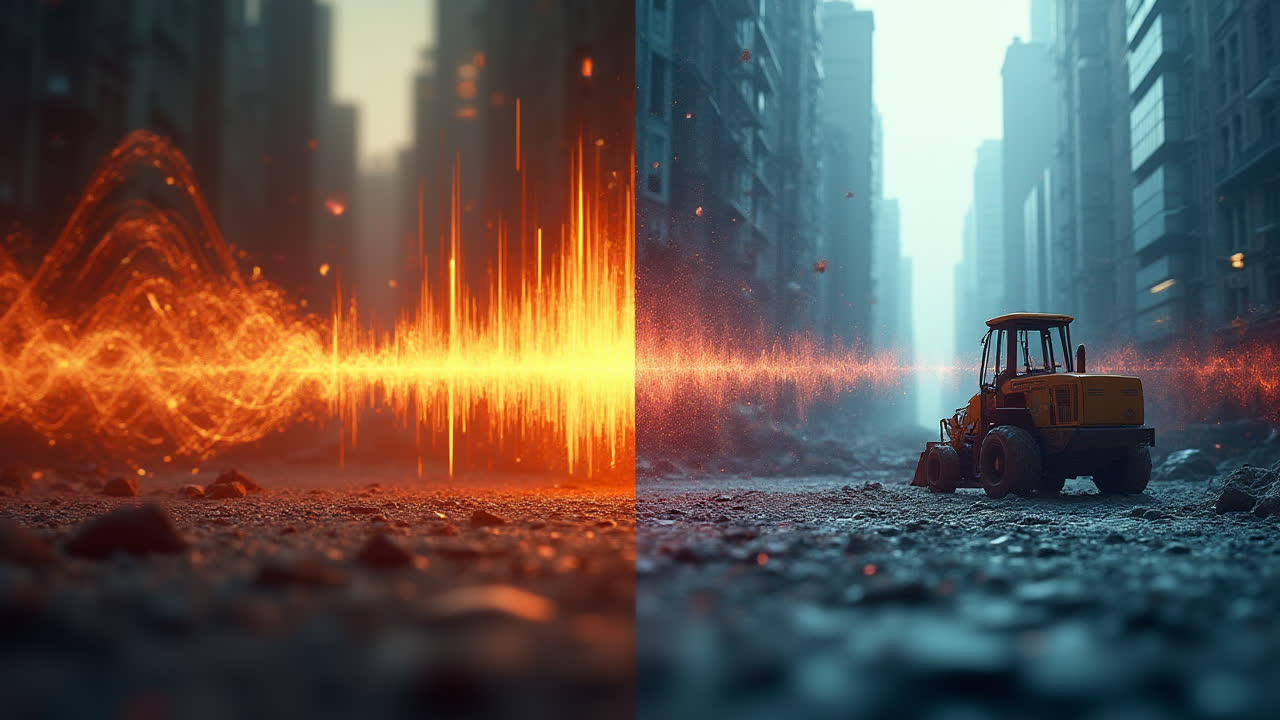
Noise is essentially unwanted sound. The distinction is largely subjective and context-dependent. What constitutes noise for one person might be pleasant or important for another. The ringtone that wakes you up for an important meeting is useful sound to you but might be irritating noise to your sleeping partner. Music that sounds heavenly to a teenager might be unbearable noise to their parents.
From a technical perspective, noise typically consists of random, disorganized frequencies across the sound spectrum. When analyzed, pure musical tones show distinct peaks at fundamental frequencies and their harmonics, creating patterns that our brains find pleasing. In contrast, noise displays a more chaotic distribution of frequencies, which our auditory system often struggles to process comfortably.
Context matters enormously in how we classify sounds. The gentle patter of rain against a window might be soothing when you're safely indoors with a good book, but that same sound becomes unpleasant noise when you're caught without an umbrella. Similarly, the sounds of construction might be irritating if you're trying to work, but represent progress if it's your home being renovated.
Our emotional associations with certain sounds also influence whether we perceive them as noise. The sound of a neighbor's party might be classified as noise partly because of the negative emotions associated with being excluded or having your sleep disturbed. Sound and emotion are intricately linked in how we experience our acoustic environment.
The Impact of Noise Pollution
Noise pollution has become a serious environmental and public health concern, particularly in urban and industrialized areas. Unlike many other forms of pollution, noise doesn't leave visible traces, making it an "invisible danger" that affects millions worldwide. Prolonged exposure to high noise levels has been linked to various health issues, including hearing loss, sleep disturbances, cardiovascular problems, and impaired cognitive performance in children.
The World Health Organization estimates that at least one million healthy life years are lost annually in Western Europe due to traffic-related noise. This staggering figure highlights the significant impact of environmental noise on public health. In my own neighborhood, residents successfully campaigned for noise barriers along a nearby highway after studies showed elevated stress levels in the community.
Animals are also significantly affected by noise pollution. Research has documented changes in bird songs in urban environments, where birds must sing louder and at higher pitches to communicate over traffic noise. Marine mammals face disruptions from shipping noise, which can interfere with their communication and navigation. These effects can cascade through ecosystems, potentially altering predator-prey relationships and mating behaviors.
To address these concerns, many countries have implemented noise regulations and mitigation strategies. Noise barriers along highways, like those in the Netherlands mentioned in our reference material, can significantly reduce traffic noise reaching nearby communities. Urban planning increasingly incorporates noise considerations, with buffer zones between residential areas and major noise sources. These efforts represent an acknowledgment that managing our acoustic environment is essential for both human and ecological health.
Noise in Signal Processing
Beyond its acoustic meaning, "noise" has an important technical definition in signal processing and telecommunications. When information is transmitted over distance—whether it's a radio broadcast, phone call, or internet data—the original signal can become distorted or corrupted by unwanted additions. These unwanted elements are referred to as "noise."
Signal-to-noise ratio (SNR) is a crucial metric that compares the level of desired signal to the level of background noise. Expressed in decibels (dB), a higher SNR indicates a clearer signal with less noise interference. Engineers continuously work to improve SNR in communication systems to ensure reliable transmission of information.
Digital signals tend to be more resistant to noise than analog signals. When a digital signal encounters noise during transmission, it can often be cleaned up through error correction algorithms, maintaining the integrity of the original information. This is why digital television generally provides better picture quality than analog broadcasts, especially in areas with weak reception.
The concept of noise in signal processing extends to many fields beyond telecommunications. In photography, image noise appears as random speckles that degrade picture quality, particularly in low-light conditions. In audio recording, equipment can introduce unwanted hiss or hum. Even in data analysis, statistical noise refers to random irregularities that can obscure the underlying patterns researchers are trying to identify.
Comparison Table: Sound vs. Noise
| Characteristic | Sound | Noise |
|---|---|---|
| Definition | Mechanical wave resulting from vibrations | Unwanted, unpleasant, or disruptive sound |
| Perception | Can be perceived as pleasant, neutral, or unpleasant | Generally perceived as unpleasant or disturbing |
| Frequency Characteristics | Can have organized patterns of frequencies | Often contains random, disorganized frequencies |
| Subjectivity | Objective physical phenomenon | Subjective classification based on listener preference |
| Environmental Impact | Not inherently harmful | Can be harmful to health and ecosystems |
| Regulation | Generally not regulated | Often subject to environmental and workplace regulations |
| Technical Usage | Describes acoustic phenomena | Also used in signal processing to describe interference |
| Examples | Music, speech, natural sounds | Traffic, construction, industrial machinery |
Managing Unwanted Noise
For many of us, reducing unwanted noise has become an important aspect of maintaining quality of life. Noise-cancelling headphones have revolutionized how we experience sound in noisy environments like airplanes or open offices. These devices use microphones to detect ambient noise, then generate sound waves that are precisely out of phase, effectively "cancelling" the unwanted sound before it reaches our ears.
Architectural acoustics plays a crucial role in creating pleasant sound environments. Modern building design incorporates sound-absorbing materials, strategic room layouts, and insulation techniques to minimize noise transfer between spaces. I once visited a concert hall where the acoustic design was so precise that a whisper on stage could be heard clearly at the back of the auditorium, while outside traffic noise was completely imperceptible.
At a community level, noise ordinances help regulate when and how much noise can be generated in residential areas. These regulations typically impose stricter limits during nighttime hours to protect sleep. Some cities have even implemented "quiet zones" near hospitals and schools, where noise-generating activities are more severely restricted.
Personal strategies for managing noise include creating dedicated quiet spaces in homes, using sound-masking techniques like white noise machines, and practicing mindfulness to change our relationship with unavoidable sounds. Sometimes, changing our perception of sound can be as effective as changing the sound itself.
Frequently Asked Questions About Sound and Noise
Can noise actually damage your hearing?
Yes, prolonged exposure to loud noise can cause permanent hearing damage. Sounds above 85 decibels (roughly equivalent to heavy city traffic) can cause hearing loss with extended exposure. The damage occurs to the sensitive hair cells in the cochlea that convert sound vibrations into neural signals. Once these cells are damaged, they cannot regenerate, resulting in permanent hearing impairment. This is why hearing protection is essential in noisy workplaces and at loud events like concerts.
Why do some people seem more sensitive to noise than others?
Sensitivity to noise varies significantly between individuals due to both physiological and psychological factors. Some people have a condition called hyperacusis, where ordinary sounds are perceived as uncomfortably loud. Neurodivergent individuals, particularly those with autism spectrum conditions or ADHD, often experience heightened sensory processing, making them more aware of and potentially distressed by background noises that others might filter out. Past experiences and associations with certain sounds can also influence sensitivity, as can current stress levels and overall health. Sleep deprivation typically increases noise sensitivity temporarily.
What makes certain sounds like fingernails on a chalkboard so universally unpleasant?
Certain sounds like fingernails on a chalkboard or styrofoam squeaking are widely considered unpleasant due to both physical and evolutionary factors. These sounds typically contain strong components in the frequency range of 2,000-4,000 Hz, which is precisely where human hearing is most sensitive. This sensitivity evolved to help us detect potential dangers, as many predator calls and warning cries fall within this range. Additionally, these unpleasant sounds often have rapid frequency modulations that acoustically resemble distress calls, triggering an instinctive negative response. Research has also shown that our aversion increases when we're told a sound will be unpleasant, demonstrating a strong psychological component to how we perceive these sounds.
Conclusion
The distinction between sound and noise reflects the fascinating intersection of physics, physiology, psychology, and culture. While all noises are sounds, not all sounds are noise—the difference lies largely in our perception and the context. As our understanding of acoustics and auditory processing deepens, we gain better tools for managing our sonic environment in ways that enhance rather than detract from our quality of life.
From designing better headphones to creating more harmonious urban soundscapes, the practical applications of differentiating between desirable and undesirable sounds are endless. And perhaps most importantly, understanding this distinction helps us appreciate the rich acoustic tapestry that surrounds us daily—from the melodious songs of birds to the rhythmic patter of rainfall, from conversation with loved ones to the music that moves us.
Next time you find yourself annoyed by a particular sound, take a moment to consider: is it inherently unpleasant, or is it simply unwanted in that particular context? This reflection might just change how you experience your acoustic environment, transforming what was once noise into simply another facet of the endlessly varied soundtrack of life.