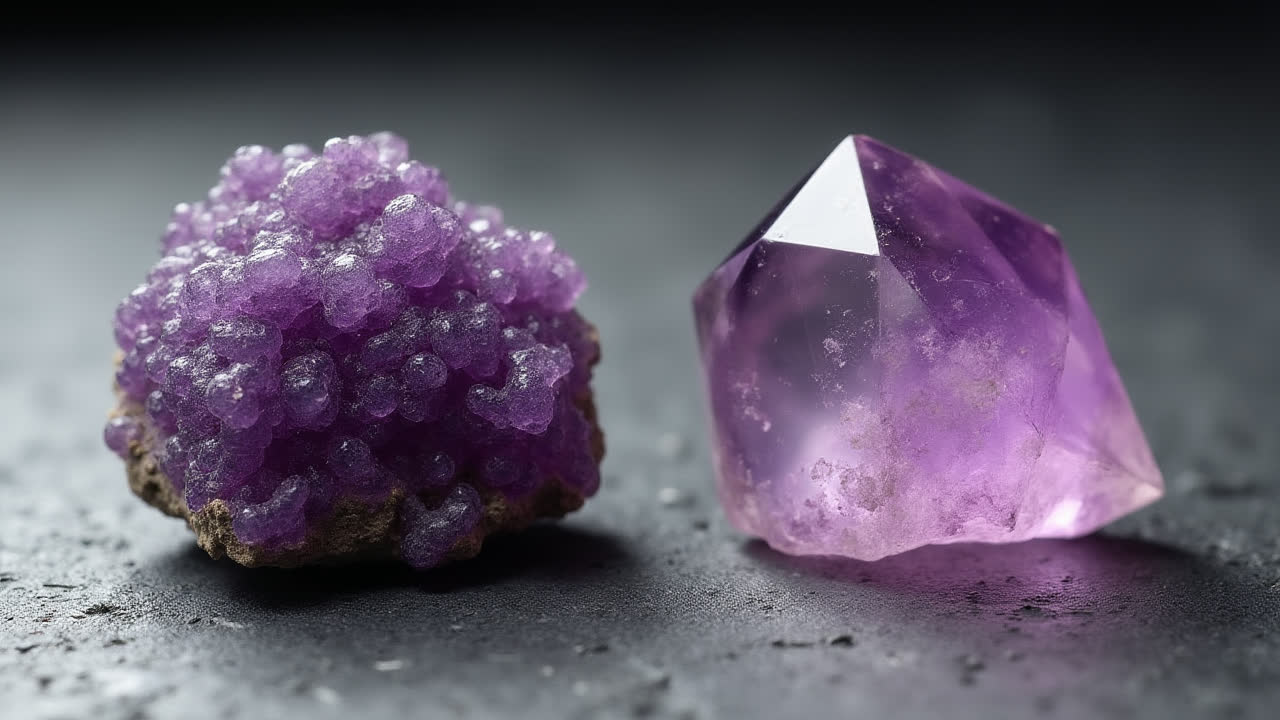
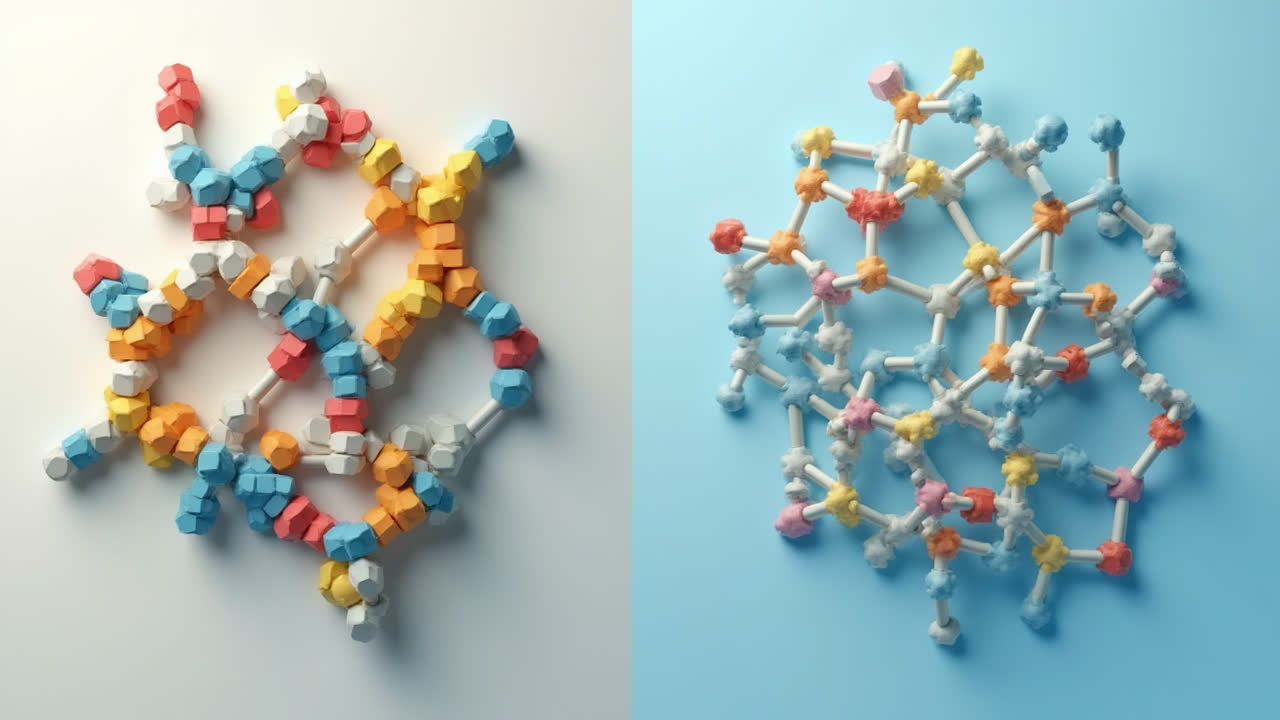
Uniaxial vs Biaxial Crystals: Understanding the Key Differences
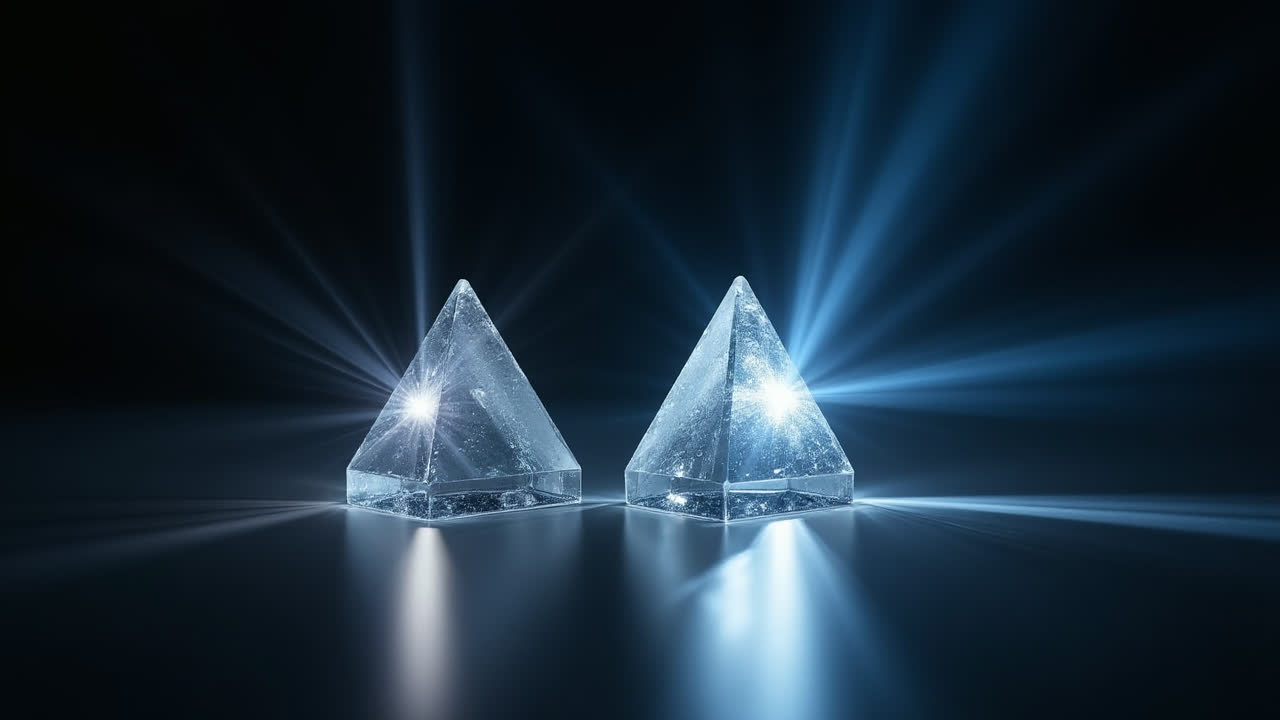
When it comes to uniaxial and biaxial crystals, the fascinating world of crystallography reveals two distinct categories that have captivated scientists for centuries. As someone who's spent hours peering through polarizing microscopes, I can tell you that understanding these crystals isn't just academic jargon—it's the foundation of how we manipulate light in everything from your smartphone display to medical imaging equipment.
These remarkable crystalline structures aren't just pretty mineral formations you'd find in a museum. They're the hidden heroes behind countless technologies we use daily. What makes them so special? Well, it all comes down to how they treat light, and that's where the magic happens.
What Makes Uniaxial Crystals Unique
When you're dealing with uniaxial crystals, you're looking at materials that, quite literally, march to the beat of one drum. These crystals have just one optic axis—a single preferred direction where light behaves consistently. Think of it like a highway with all the lanes going in the same direction. Light traveling along this axis doesn't split; it keeps its singular path.
The real show-stopper with uniaxial crystals is birefringence. When light enters these crystals at any angle other than along the optic axis, it splits into two rays: the ordinary ray (which plays by the rules) and the extraordinary ray (which takes the scenic route). It's like watching a magic trick that never gets old.
Some famous examples include:
- Calcite - Nature's own polarizer
- Quartz - The timekeeper's best friend
- Sapphire - Not just for jewelry
Decoding Biaxial Crystals
Now, biaxial crystals are the overachievers of the crystal world. They don't settle for one optic axis—they've got two! It's like having two express lanes on your light highway. This dual-axis feature gives these crystals a unique personality when it comes to manipulating light.
The optical properties of biaxial crystals get even more interesting when you consider their three refractive indices. Yes, you heard right—three! These crystals essentially have three different ways of bending light, which opens up possibilities that would make any optical engineer's heart skip a beat.
Some common biaxial crystals you might encounter:
- Mica - The original layered material
- Topaz - Beauty meets functionality
- Lead oxide - Industrial workhorse
Comparison Table: Uniaxial vs Biaxial Crystals
| Property | Uniaxial Crystals | Biaxial Crystals |
|---|---|---|
| Number of Optic Axes | One optic axis | Two optic axes |
| Refractive Indices | Two (n_o and n_e) | Three (n_x, n_y, n_z) |
| Light Behavior | Ordinary and extraordinary rays | Three distinct rays possible |
| Crystal Systems | Tetragonal, hexagonal, trigonal | Orthorhombic, monoclinic, triclinic |
| Optical Indicatrix | Ellipsoid of revolution | General ellipsoid |
| Birefringence Type | Positive or negative | Complex (2V angle) |
| Common Examples | Quartz, calcite, sapphire | Topaz, mica, lead oxide |
| Industrial Applications | Polarizers, wave plates | Optical microscopy, mineralogy |
Real-World Applications: Where These Crystals Shine
You might be wondering, "Why should I care about these fancy crystals?" Well, here's the thing: these aren't just academic curiosities. The applications of both uniaxial and biaxial crystals touch our daily lives in ways we don't even realize.
In the telecommunications industry, optical fibers wouldn't work half as well without understanding how these crystals manipulate light. Your polarized sunglasses? They're using principles first discovered in uniaxial crystals like calcite. Even the LCD display on your smartphone relies on crystal optics to show you that perfect selfie.
Speaking from experience, working with these crystals in the lab is like being a light sculptor. You can literally bend, twist, and split light beams with precision that would have seemed like magic to scientists just a century ago.
Finding the Right Crystal for Your Needs
Choosing between uniaxial and biaxial crystals isn't just about counting optic axes. It's about understanding what you're trying to achieve. Need simple polarization? A uniaxial crystal might be your best friend. Working with complex optical systems? You might need the versatility of a biaxial crystal.
The key differences come down to:
- Complexity of optical behavior
- Number of controllable parameters
- Cost and availability
- Specific application requirements
In my work with optical instruments, I've found that sometimes the simplicity of a uniaxial crystal is exactly what's needed, while other times, only the sophisticated nature of a biaxial crystal will do.
FAQ Section
How do scientists identify whether a crystal is uniaxial or biaxial?
Scientists use polarized light microscopy and techniques like conoscopic observation to identify whether a crystal is uniaxial or biaxial. Under crossed polarizers, uniaxial crystals show a distinctive cross pattern when viewed along the optic axis, while biaxial crystals display more complex interference figures with two melatopes (dark spots) when viewed in the appropriate orientation.
Can a crystal change from uniaxial to biaxial under different conditions?
Yes, some crystals can undergo phase transitions that change their optical properties. Temperature, pressure, or chemical modifications can alter a crystal's structure, potentially converting it from uniaxial to biaxial or vice versa. This property is actually utilized in some smart materials and optical switching applications.
Which type of crystal is better for making precision optical instruments?
The choice depends on the specific application. Uniaxial crystals are often preferred for polarization optics and basic wave plates due to their simpler optical behavior and consistent performance. Biaxial crystals are typically used when more complex light manipulation is needed, such as in advanced polarimetric instruments or specialized microscopy techniques where their three refractive indices can be leveraged for enhanced functionality.
Looking Forward: The Future of Crystal Optics
As we push the boundaries of what's possible in optical technology, understanding uniaxial and biaxial crystals becomes increasingly important. Emerging fields like quantum computing and advanced photonics are finding new ways to exploit these crystalline properties.
The distinction between these two crystal types might seem academic at first glance, but it represents a fundamental difference in how matter interacts with light. And in our increasingly photonic world, that understanding becomes a superpower.
Whether you're a student just discovering the wonders of crystallography or an engineer designing the next generation of optical devices, remember: every crystal has a story to tell, and those stories are written in light.