Vascular vs Non-Vascular Plants: Key Differences Explained
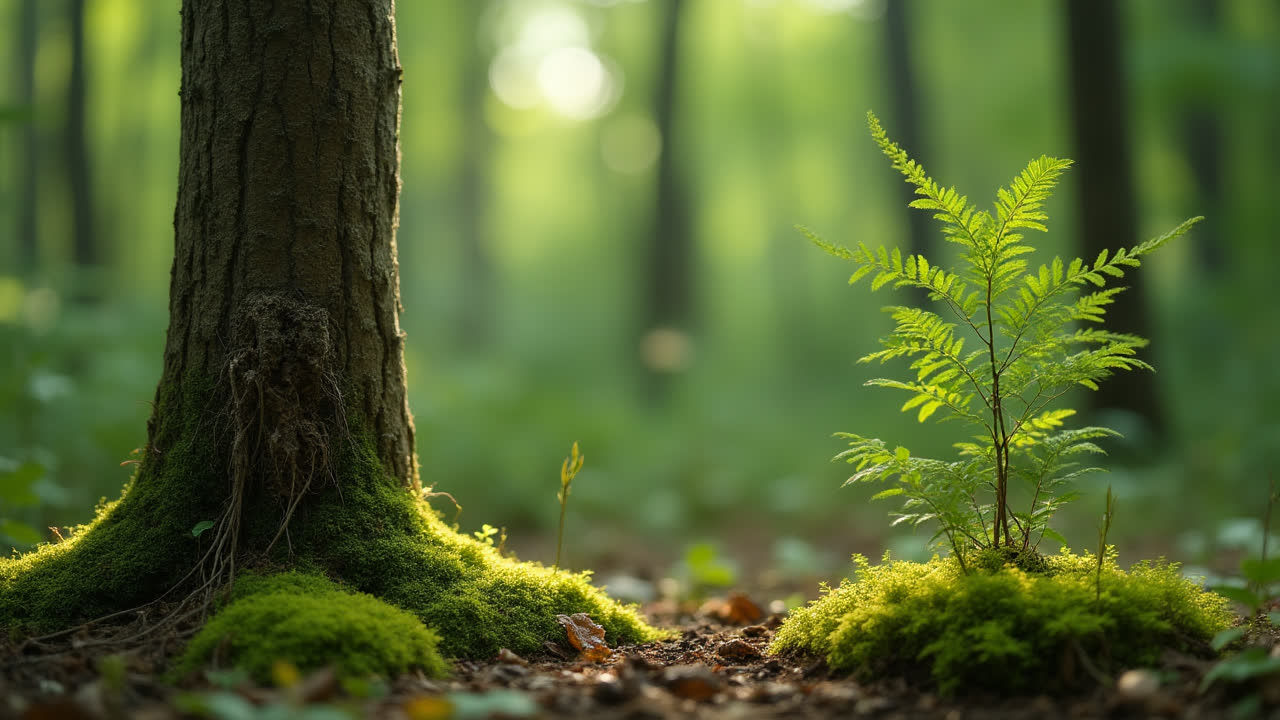
The plant kingdom is incredibly diverse, with species adapted to almost every environment on Earth. Among the most fundamental classifications in botany is the distinction between vascular plants and non-vascular plants. This categorization isn't just academic—it represents a crucial evolutionary divergence that shaped how plants conquered land and diversified into the countless species we see today. But what exactly separates these two plant types, and why does it matter? Let's explore the fascinating world of plant vascular systems and discover how they've influenced plant evolution.
Understanding Vascular Plants
Vascular plants, also known as tracheophytes or higher plants, possess specialized tissue systems for transporting water, minerals, and nutrients throughout their bodies. These transport tissues—xylem and phloem—represent one of nature's most remarkable innovations. The xylem moves water and dissolved minerals upward from roots to leaves, while the phloem distributes sugars and other organic nutrients throughout the plant. This efficient transport system first appeared approximately 430 million years ago, fundamentally changing plant life on Earth.
What makes vascular plants truly revolutionary is their ability to grow tall. The lignified xylem provides structural support, allowing these plants to reach toward the sky, competing for precious sunlight. This adaptation opened new ecological niches and eventually led to the development of forests, dramatically reshaping Earth's landscapes and ecosystems. Have you ever wondered how trees manage to transport water to leaves hundreds of feet above the ground? It's all thanks to their sophisticated vascular systems!
The vascular plant group includes all seed plants (gymnosperms like conifers and angiosperms like flowering plants) as well as pteridophytes (ferns, lycophytes, and horsetails). These plants are well-differentiated into specialized organs—roots, stems, and leaves—each with distinct functions. Their dermal tissue system contains cutin, forming a waxy cuticle that protects against water loss while regulating gas exchange through specialized pores called stomata. This adaptation proved crucial for plants conquering drier environments away from constantly moist habitats.
Exploring Non-Vascular Plants
In contrast to their vascular relatives, non-vascular plants lack specialized tissue systems for internal transport. This fundamental difference restricts their size and habitat. Without efficient transport systems, these plants depend primarily on direct diffusion and osmosis to move water and nutrients between cells. As a result, they remain relatively small and are typically found in moist environments where their surfaces can directly contact water.
Non-vascular plants don't possess true roots, stems, or leaves. Instead, they have simpler structures that fulfill similar functions. For instance, they develop rhizoids rather than true roots—thin filaments that anchor the plant but lack vascular tissue for efficient water transport. Some non-vascular plants have leaf-like structures, but botanists don't classify them as true leaves due to the absence of vascular tissue. Don't you find it fascinating how these ancient plant forms solved survival challenges without complex tissues?
Despite these limitations, non-vascular plants possess remarkable adaptations. Many can withstand extreme dehydration, essentially "shutting down" during dry periods and reviving when moisture returns—a trait called poikilohydry. Their life cycle differs significantly from vascular plants, with the dominant phase being the haploid gametophyte rather than the diploid sporophyte. The main groups of non-vascular plants include bryophytes (mosses, liverworts, and hornworts) and algae, representing some of the oldest plant lineages on Earth.
Comparative Analysis: Vascular vs Non-Vascular Plants
| Characteristic | Vascular Plants | Non-Vascular Plants |
|---|---|---|
| Transport System | Specialized xylem and phloem tissues | No specialized vascular tissues; rely on diffusion |
| Size | Can grow large (up to hundreds of feet) | Small (typically a few inches or less) |
| Reproduction | Seeds or spores; many independent of water for fertilization | Spores only; require water for fertilization |
| Principal Generation | Diploid sporophyte dominant | Haploid gametophyte dominant |
| Structural Organization | True roots, stems, and leaves | Rhizoids and simplified thallus structure |
| Water Conservation | Cuticle and stomata regulate water loss | No specialized structures to prevent desiccation |
| Habitat Range | Diverse habitats, including dry environments | Primarily moist environments |
| Examples | Trees, shrubs, ferns, flowering plants, conifers | Mosses, liverworts, hornworts, algae |
Evolutionary Significance
The evolution of vascular tissue represents one of the most important transitions in plant evolution. Before vascular systems emerged, plants were confined to moist lowlands where water was readily available. The development of specialized transport tissues liberated plants from this restriction, allowing them to colonize diverse habitats including drier upland areas. This evolutionary innovation fundamentally altered Earth's ecosystems and set the stage for the explosive diversification of plant life.
Non-vascular plants, despite their limitations, have persisted throughout evolutionary history. Their simple structures and reproductive strategies have proven remarkably effective in certain ecological niches. Mosses, for example, play crucial roles in ecosystem functions like water filtration, erosion control, and nutrient cycling. In some environments like bogs and tundra, bryophytes dominate the landscape despite the presence of vascular plants. I've always been amazed by how these seemingly simple organisms have maintained their ecological importance for hundreds of millions of years!
The distinction between vascular and non-vascular plants also reveals fascinating aspects of plant adaptation. Both groups represent successful evolutionary strategies, each with trade-offs and advantages. Vascular plants invested in complex tissues that allowed them to grow tall and exploit new environments, while non-vascular plants maintained simpler structures but developed remarkable resilience to environmental stress. Together, they demonstrate the diverse solutions nature has found to the challenges of terrestrial plant life.
Ecological Roles and Human Importance
Vascular and non-vascular plants play distinct ecological roles. Vascular plants form the structural foundation of most terrestrial ecosystems, providing habitat, food, and oxygen through photosynthesis on a massive scale. Their ability to grow tall created forest canopies that support incredible biodiversity. Many vascular plants form mutually beneficial relationships with fungi (mycorrhizae) and bacteria, enhancing nutrient uptake and soil health.
Non-vascular plants like mosses often act as pioneer species, colonizing bare rock and soil, creating conditions favorable for later-arriving vascular plants. They contribute to soil formation, retain moisture, and provide microhabitats for countless small organisms. In certain ecosystems, especially in northern latitudes, non-vascular plants store massive amounts of carbon, playing a significant role in global carbon cycles. Sphagnum moss alone is estimated to store more carbon than any other plant genus!
From a human perspective, vascular plants provide most of our food, fiber, fuel, medicine, and building materials. Their economic importance is immeasurable. While non-vascular plants have fewer direct commercial applications, they're increasingly valued for environmental monitoring, as they often serve as sensitive indicators of air quality and ecosystem health. Some bryophytes have traditional medicinal uses, and peat moss has been used for centuries as fuel and horticultural material. The study of both plant groups continues to yield valuable insights for agriculture, conservation, and biotechnology.
Conclusion
The distinction between vascular and non-vascular plants represents a fundamental division in the plant kingdom with far-reaching implications. Vascular plants, with their specialized transport tissues, structural support, and reproductive adaptations, have achieved remarkable size and diversity, dominating most terrestrial ecosystems. Non-vascular plants, while more limited in size and distribution, display impressive resilience and ecological significance despite their simpler organization.
Both plant types showcase nature's ingenuity in solving the challenges of terrestrial life. Understanding their differences enhances our appreciation of plant diversity and evolution, while highlighting the various strategies plants have developed to thrive in different environments. From towering sequoias to tiny mosses carpeting forest floors, each represents a successful approach to plant survival, reminding us of the remarkable adaptability and importance of plant life on Earth.
Frequently Asked Questions
What is the main difference between vascular and non-vascular plants?
The main difference between vascular and non-vascular plants is their internal transport system. Vascular plants have specialized tissues (xylem and phloem) that transport water and nutrients throughout the plant, allowing them to grow tall. Non-vascular plants lack these specialized tissues and rely on simple diffusion, which limits their size and typically restricts them to moist environments.
Why can vascular plants grow much taller than non-vascular plants?
Vascular plants can grow much taller than non-vascular plants because of two key adaptations: their specialized transport system and structural support. The xylem efficiently moves water and minerals from roots to leaves even at great heights, while lignified xylem cells provide rigid structural support, essentially functioning as an internal skeleton. Non-vascular plants, lacking these adaptations, can only transport water and nutrients through direct diffusion between cells, which becomes inefficient beyond a few centimeters in height.
What are some examples of vascular and non-vascular plants?
Common examples of vascular plants include trees, shrubs, ferns, flowering plants (like roses, sunflowers, and grasses), and conifers (like pines and spruces). Non-vascular plants include mosses, liverworts, hornworts, and various types of algae. While vascular plants make up most of the visible plant life in terrestrial ecosystems, non-vascular plants are often found growing on tree trunks, rocks, or in consistently moist environments like stream banks and forest floors.